

See show notes for this episode: S 02 | Ep 28 Predictable Magic: The $10 Billion Design Secret.
00:00:32 Alex Shevelenko Welcome to Experience-Focused Leaders. I'm delighted to bring to you Ravi Sawhney. Ravi is the CEO and founder of RKS Design, a firm that has been prolific for nearly four decades, bringing design to some of the most important products and companies in the world. He is currently also the founder and CEO of PA AI, which is productizing the design philosophy he invented called Psychoesthetics. Ravi, welcome to the pod.
00:01:08 Ravi Sawhney Thank you, Alex. Happy to be here.
00:01:10 Alex Shevelenko Ravi, let’s start with Psychoesthetics™. This is your trademark, and we’d love to understand what it is. I think everybody wants to create something beautiful, but very few of us have the depth and breadth of your experience in knowing what that truly means. We all hear that psychology is important, but there is a lot to unpack in terms of how to apply it. Tell us more.
00:01:44 Ravi Sawhney Psychoesthetics is a term I coined in the early '90s because I had been developing a human-centered methodology. I’ve been in design now for fifty years. In the early part of my career, I was recruited out of college into a Xerox think tank with the human factors group. Working alongside 30 PhD psychologists, we were developing the first touchscreen interface.
00:02:25 Alex Shevelenko So, that’s the stuff Steve Jobs "stole." You basically helped develop that at Xerox PARC?
00:02:32 Ravi Sawhney It all came out of PARC, yeah. I don’t know if Jobs stole it or did a trade, but he definitely brought it to life. At that time, the touchscreen needed to be developed because the controls were so expansive. It was a global product with different languages; you couldn't build a physical control panel large enough to handle everything digital printing could do then. We could scan a document, write the copy, create a newsletter, and send it all over the world.
00:03:16 Ravi Sawhney What I learned from those psychologists is that it is all about human factors and psychology. I wasn’t really cut out for corporate life, so I left after a couple of years to start RKS Design. In 1982, I decided to write an underpinning for the firm to keep us human-centered and grounded. I wrote: "It’s not how you feel about a design or an experience; it’s how it makes you feel about yourself."
I turned the camera 180 degrees. When someone looks at our design work, we are looking back at them and watching what happens. Understanding how people feel about themselves through the things that come into their lives is what it’s all about.
00:04:10 Alex Shevelenko So, for a layman like myself: human-centered design is the opposite of product-centered design? Instead of "I have this innovation, look how great it is," it's more about asking, "What do you feel in the first place, and how do we create the feelings you want more of through our product?"
00:04:44 Ravi Sawhney Exactly. It’s very grounded. Maya Angelou once said that people will forget what you said and did, but they’ll never forget how you made them feel. Over time, I developed this into a structured methodology. Our first big project using this—which was a huge success—was Teddy Ruxpin in the '80s. It was a phenomenal talking teddy bear that captured the world. I used my methodology to make it relate to people.
00:05:18 Ravi Sawhney It was a teddy bear that came to life. How does that make people feel? That project was a phenomenal success. Along the way, we evolved and looked at Maslow’s Hierarchy of Needs, reinventing it into a mapping system that measures self-actualization and interactivity. We also started building out in-depth personas.
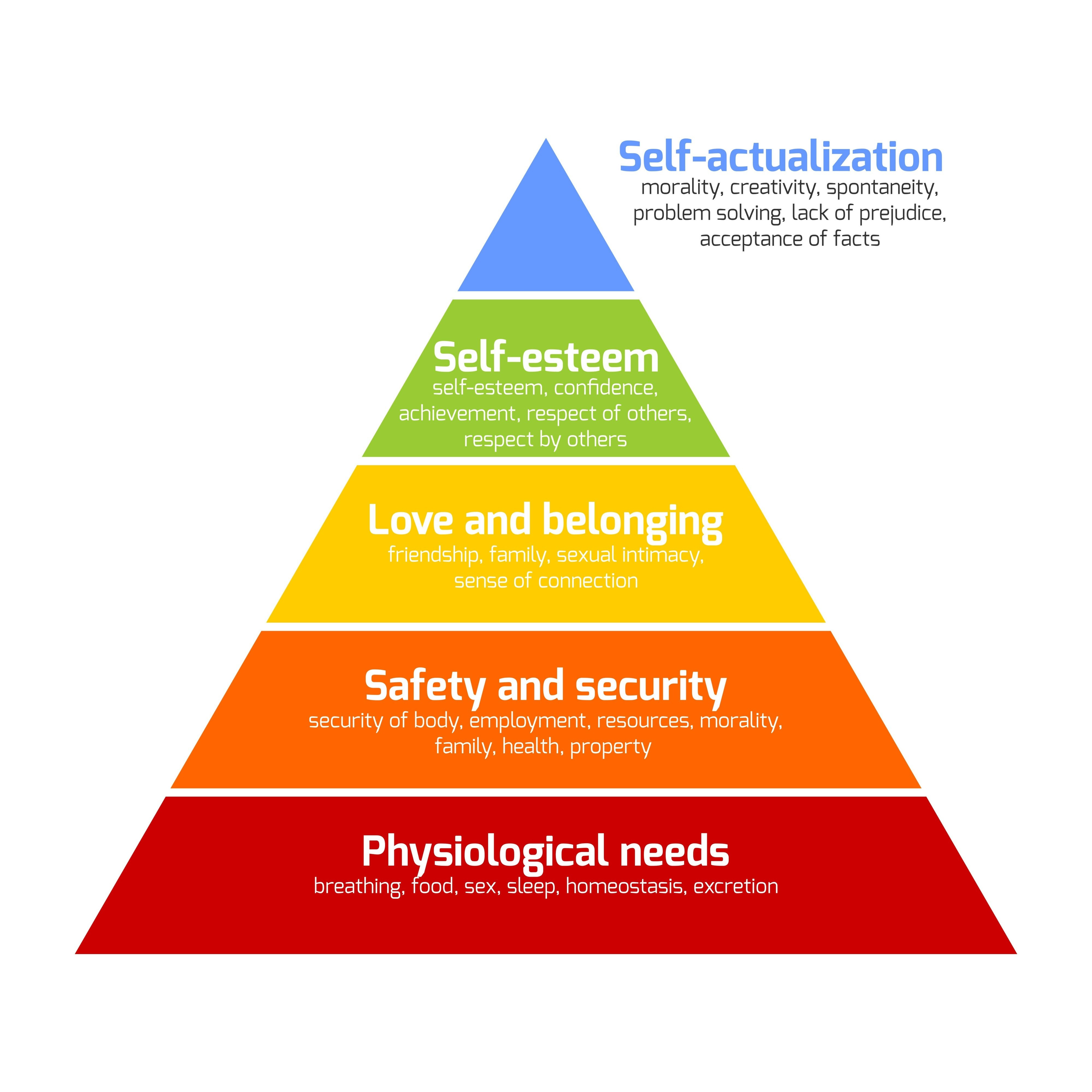
00:05:40 Alex Shevelenko Let's pause there. Most people know the fundamental Maslow’s hierarchy—starting with basic survival needs and moving up to connection and, ultimately, self-actualization. I think the latest versions even go beyond that, into being in service of something bigger than ourselves. How does that apply to the world of design? Everybody wants their message, product, or service to connect with people on that level. How did you think about that?
00:06:19 Ravi Sawhney As we used Maslow’s hierarchy, we found two things. First, it was somewhat one-dimensional; you had to "peg" someone on a specific rung of the ladder. It didn’t really help us create things that motivated people to do something new for themselves. Just understanding that a need is "basic" or "high self-actualization" wasn't enough.
So, we began mapping interactivity against self-actualization, which gave us four quadrants:
The Basic Quadrant (Low interactivity, low self-actualization)
The High Interactivity Quadrant
The Aesthetic Quadrant
The High Self-Actualization Quadrant
We found we could map anything—every product or service falls into a rating of self-actualization versus interactivity.
00:07:30 Ravi Sawhney For example, a paperclip is low interactivity and low self-actualization.
00:07:37 Alex Shevelenko Let’s explain that. I can’t do much with a paperclip other than use it for its one job. Using it doesn’t make me feel like a richer or more complete human being. Right?
00:07:54 Ravi Sawhney Exactly. It’s almost mindless. You grab it, you use it, you don’t think about it. Now, if we move far to the right—low self-actualization but high interactivity—you have a tool like a skip loader.
00:08:21 Alex Shevelenko I’m sorry, what is a skip loader?
00:08:25 Ravi Sawhney It’s basically a tractor with a shovel on it. It requires eyes, ears, hands, and feet to operate. You interact with it extensively, but it isn't necessarily fulfilling. It’s just a tool you use at work. You don’t dream about it at night, and it doesn’t make you feel like a special person. It’s just a tool.
00:09:07 Alex Shevelenko Well, maybe the first time you drive one!
00:09:08 Alex Shevelenko Maybe the first time! If you’re a 14-year-old and you get on a tractor, sure—but after that, the novelty wears off.
00:09:13 Ravi Sawhney That’s a different case entirely.
00:09:17 Alex Shevelenko Right. So it’s a tool. You’re highly engaged in using it, but it doesn’t define who you are.
00:09:25 Ravi Sawhney Exactly. Now, if we look at what is low interactivity but high self-actualization, seeing the Mona Lisa is a perfect example. It’s a high-level experience. You have to go to Paris, get a ticket, and wait in line at the Louvre.
00:09:42 Alex Shevelenko And you probably smoke a cigarette before you go in—you do all the things that make the memory stick. Then you come back and tell everyone you’ve reached your dream of seeing it.
00:09:56 Ravi Sawhney And when you finally see it, it’s the longest 30 seconds of your life. There are people waiting behind you, guards standing by, and it’s behind glass and a rope. You never touch it; you don’t interact with it physically. You just look at it, yet you remember it for the rest of your life as if it happened yesterday.
00:10:25 Alex Shevelenko I get it. It’s a special, rare experience. Paris and the Mona Lisa hold a specific place in our collective psyche. There’s scarcity involved. Even if the glare from the protective screen is annoying and you're surrounded by crowds, you still remember it. You experience something sublime in that moment.
00:10:58 Ravi Sawhney That’s right. And then, if we go to the far right—high interactivity and high self-actualization—a sports car is a great example for many people. It has all the interactivity of the tractor combined with the beauty and self-actualization of the Mona Lisa.
Every time the owner looks at it, they feel accomplished, empowered, and alive. It changes how they perceive themselves. Living in Southern California, which is a massive car culture, that is a very relevant way to see it.
00:11:47 Alex Shevelenko So, for the sake of the city dwellers in New York or Paris who might not own cars, let's look at how this mapping works for other things...
Here is the edited final segment of the transcript. I’ve focused on clarifying the dialogue while maintaining the "peer-to-peer" conversational energy.
00:11:55 Alex Shevelenko So, in Southern California, a sports car represents the glamour of Hollywood and the wind in your hair. You are that California lifestyle. What are the specific things that make it work? Is it largely the cultural narrative we’ve built around the car?
00:12:22 Ravi Sawhney That’s just one example. What we’ve found is that we can actually map personas. We perform deep-dive interviews—globally, we’ve interviewed well over 3,000 people. By conducting ethnography and truly learning about them, you find you can map exactly where they are today.
It’s about more than just the "voice of the consumer"; it’s about really understanding people. You have to talk to them. When you do, you can map their position. And this mapping is a team sport—everyone debates and moves things around until the team reaches an agreement.
00:13:09 Alex Shevelenko So, wait. The product has a certain place on the map, but individuals can be placed there too?
00:13:16 Ravi Sawhney People fall onto the map, and so do brands.
00:13:21 Alex Shevelenko That makes sense for brands and products. Tell me more about the people. How do they fit into this mapping system?
00:13:32 Ravi Sawhney It depends on the specific objective. But let’s say I’m developing a new cell phone. I look at the market and the applications, and based on our personas, I’d say most people are moving toward the "upper right" with their phones.
Think about it: you’re in a restaurant with your phone on the table. If it looks antiquated, how does that make you feel about yourself? If it looks fresh, new, and current, you feel connected. That feeling is what takes you to the upper right quadrant.
00:14:25 Alex Shevelenko Got it. So for high-innovation, high-commitment products, the goal is the upper right. But what if I’m someone who is perfectly happy with a twenty-year-old flip phone? I’m trying to get away from technology as much as possible, so the status of the phone doesn't matter to me.
00:14:49 Ravi Sawhney Then you might be in the lower-left—the Basic Quadrant.
00:14:53 Alex Shevelenko And then someone else might say, "It’s a BlackBerry; I just use it to send emails, not to express myself." That makes a lot of sense. So you identify these personalities, and then you can pick and choose your ideal buyer profile based on what you’re building?
00:15:13 Ravi Sawhney Exactly, but it actually goes much further than that.
00:15:15 Ravi Sawhney It actually moves into predictive modeling. By studying these personas, you learn where people are today—that’s the "voice of the consumer." But the real question is: where do they want to go? Our goal is to motivate someone to do something beneficial for themselves that they might not otherwise do. It’s human nature to want to evolve and grow; people want to be more tomorrow than they are today.
00:15:51 Ravi Sawhney Lately, we’re seeing many people move toward the upper-left quadrant (High Self-Actualization, Low Interactivity). They’re saying, "I want the benefit, but I don't want to struggle with the interface. I just want to talk to my phone; I don’t even want to touch a button."
00:16:04 Alex Shevelenko Interesting. So they just want to be "done" with the task without thinking about it.
00:16:08 Ravi Sawhney Exactly. "I want this beautiful artifact that is completely voice-activated. The minute I interact with it, it asks, 'What would you like to do today?' and I just say, 'Call my wife.'" That’s the direction people are heading. You have to project where people want to land in the future, otherwise, you'll end up behind the times. This became our predictive model for forecasting the future of design.
00:16:47 Ravi Sawhney We saw this even with DNA sequencers. Initially, we thought they belonged in the lower-right—the "high technology/utilization" quadrant. But as we spoke to scientists and Chief Medical Officers, they told us, "DNA sequencing is going to change the planet and increase the quality of life for everyone. We want a signature design that signals this is the future of medical science."
00:17:22 Alex Shevelenko When you say "signature," you usually mean something pushed toward that upper-right corner, right? High interactivity and high self-actualization?
00:17:31 Ravi Sawhney Exactly. Maybe not all the way to the corner, but definitely further than the competition.
00:17:40 Alex Shevelenko And this is for a B2B product! So, even with a scientific tool, it’s not just about the specs. It’s about how that science fits into the buyer's persona and their perception of themselves.
00:18:04 Ravi Sawhney Precisely. It’s about the personal identity created through that design language. That project was a phenomenal success for Life Technologies—not just because of the design language we built, but because they paired it with technology that allowed a sequence to be done in two hours for a thousand dollars.
00:18:27 Ravi Sawhney That move took them from a $5 billion market cap to a $15 billion exit just four months after the launch of the new product.
00:18:37 Alex Shevelenko You’ve developed and refined this framework, and it feels incredibly sophisticated. You’re finding where the customer is moving—or wants to move—and assessing if the product can actually fulfill that need within its technical constraints. Then there is the brand. It sounds like some brands have certain "permissions," and in other cases, you might need to create an entirely new brand to avoid missing out on a distribution advantage. How do you balance all of that?
00:19:21 Ravi Sawhney It often comes down to the presentation of the brand. When we talk about where people want to go, that creates the "white space." You look at the competitive landscape and ask: Is that white space a Blue Ocean opportunity?
00:19:39 Alex Shevelenko So you start with that—where people generally want to go. You don’t start with, "I have this cool tech that does in two hours what used to take twenty." That info might help later, but you start with the human direction and the competitive density around it.
00:19:59 Ravi Sawhney Exactly. Then you test the different brands, including the existing one. In the case of Life Technologies, they had grown through acquisition. Over 30 different companies had come together, all running as individual profit centers. Their badges were cluttered, saying things like "Life Technologies, a division of..."
We took all that and simplified it into a clean badge that just said Life Technologies. We removed the unnecessary verbiage because their branding was stuck in the lower-right ("The Tool" quadrant), and we moved them into the Opportunity Zone.
00:20:43 Ravi Sawhney We actually floated the word "Life" between two pieces of clear plastic and put "Technologies" on the back. It created a physical drop shadow that changed as you walked by. It wasn't a printed effect; it was real. Since DNA "floats" in space, the badge had a resonance that matched the science. That is how you move a brand into that upper zone.
00:21:29 Alex Shevelenko So you start experiencing the promise of the product the moment you look at it. You’re creating that great first impression—similar to how you feel the "Apple experience" the moment you start opening the packaging—but you’re doing it for B2B.
00:21:46 Ravi Sawhney Precisely. And that ties directly into the Hero’s Journey. We build the personas, and then we map out the user journeys through that lens.
00:21:57 Ravi Sawhney We start by looking at "pain states" and transforming them into "help me" statements. But ultimately, we take people through the Hero’s Journey. We leverage Maslow for the psychology, and then we leverage Joseph Campbell for the narrative.
Campbell found a universal truth across all cultures: the story of the hero emerges in all great religions and storytelling. We decided to use that journey as the narrative for a product, service, or experience. We want to make people feel like a hero every day of their lives.
00:22:44 Ravi Sawhney When we get to the design phase, we ask: How do we use design to attract someone? That’s the "Call to Adventure." Then, how do we engage them through micro-affirmations? This is where the challenge lies. Once you’re attracted to something, you’re always a little hesitant. You think, "Yeah, it’s pretty, but are you just going to disappoint me?"
Think of the famous Philippe Starck lemon juicer—the one with the three legs that looks like an alien acorn. It’s a beautiful work of art, and people keep it in their kitchens for that reason, but you can’t actually use it. To move a user from attraction to adoption, you have to provide affirmation after affirmation until they eventually adopt the product into their lives.
00:23:57 Alex Shevelenko Let’s take a step back and connect that to the Hero’s Journey more specifically. How does that work in product design or initial onboarding? Many of our customers are creating content, and I think it’s vital to communicate that journey—the aspirations and the challenges—even before they encounter the product. How do you create that "Joseph Campbell meets modern design" experience?
00:24:49 Ravi Sawhney First, you have to have an incredible level of design talent because today’s consumers are design experts. Twenty or thirty years ago, design was an elite concept. Today, you can go to a village in Africa and find a teenager who can give you a masterclass on the design language of Nike or Apple.
00:25:32 Alex Shevelenko So the "Design Quotient" of the average person has gone through the roof?
00:25:38 Ravi Sawhney Absolutely.
00:25:39 Alex Shevelenko And that applies to everything, right? Not just the physical object, but the copy, the headlines, and the content?
00:25:53 Ravi Sawhney It’s true in everything. It’s about having the right headline and the right "attractor" to pull someone in immediately. In marketing, you’d call it the "hook."
00:26:12 Alex Shevelenko So, basically, there is a lot less room for error today. Whether it’s a consumer in a developing nation or an enterprise B2B buyer, they are all savvy design consumers in their everyday lives. They expect that same level of sophistication in everything they touch.
00:26:31 Ravi Sawhney Even with an MVP—like PAAI, which we're launching next month—you have to check all the boxes. Deepak Chopra calls it the "Yummy vs. Yuck" response. You look at something and immediately say, "That fits me; I relate to it, I’m attracted to it, and I want to engage with it." Or, you say, "Yeah, that's not for me."
00:27:01 Alex Shevelenko We have a saying regarding content for our customers: you never get a second chance to make a first impression. People really do judge an e-book or a report by its cover. We like to think, "I worked so hard to get the data right and ensure everything is compliant," but if it looks like everything else, the reader’s impression will be that it is like everything else. That defeats the purpose of all that hard work.
00:27:44 Ravi Sawhney Exactly. That’s the "Call to Action."
00:27:50 Alex Shevelenko And you’re turning that Call to Action into a "Call to Adventure." Based on how you use Campbell’s framework, it’s about more than just attraction—it's about the depth of the experience.
00:28:03 Ravi Sawhney It’s engagement, adoption, and the "Moment of Truth." The first time you use or share something, it should make you feel good about yourself because it's about self-actualization. We are all looking for self-affirmation. You and I are on a Hero’s Journey together right now; something attracted us to this call, and now we’re engaging and testing ideas.
00:28:46 Ravi Sawhney Eventually, hopefully, you’ll adopt some of my ideas and share them—that’s the Moment of Truth. When that happens, the "Hero" emerges. Your body language and self-esteem change, and you start sharing.
The best example I have is the most mundane product we’ve ever done: a can opener for the global brand Zyliss. You’ve probably seen their products in kitchens everywhere. While designing their new generation can opener, we applied Psychoesthetics and mapped the user journey. We realized that even though hundreds of can openers exist, the experience is actually quite difficult. You have to squeeze two handles together while turning a lever; if you get distracted and release your grip even slightly, you lose the seal and have to start all over again.
00:29:45 Ravi Sawhney Exactly. We decided to make the two handles of the can opener click together. When you puncture the can, the handles lock in place so you can just turn the lever without having to maintain a constant squeeze. It becomes completely mindless. That feature alone helped generate almost 40,000 reviews on Amazon for a $15 can opener.
00:30:10 Ravi Sawhney If you’re looking over the horizon, you have to ask: "How can I create a viral effect through self-actualization?" You want to create an experience so powerful that people actually want to share their "can opener experience." Can openers have been around since Napoleon’s time and there are hundreds of choices. It’s not just about beauty—you use beauty to attract, but then you add that refined interaction.
00:30:49 Alex Shevelenko So it’s beauty plus utility plus a specific interaction. The "click" is the experience—the haptic feel and the sound of it locking into place.
00:31:08 Alex Shevelenko This really resonates with our audience at Relate to AI. I was just thinking: you’re taking a low-interaction, low-actualization "report" and reimagining it. Usually, a shared report is like a black-and-white, old-fashioned can opener. But imagine turning it into a multidimensional, highly interactive, aesthetic version.
00:31:51 Alex Shevelenko In that case, you get directly to the areas you want. You don't have to go page-by-page. You interact. If you’re a video person, you get video; if you’re an audio person, you can listen to mini-podcasts. If you’re an AI superuser, you can chat with the report. It adapts to your needs, becoming a deep, personal experience.
00:32:19 Alex Shevelenko On the front page, a video plays that signals, "This is not your grandma’s report built in a basement thirty years ago." This fits your framework beautifully because it creates layers of interactivity and ownership. The viewer thinks, "I want to control what I read; I don’t want to be controlled by you." That is self-actualization. I want to control my time and my learning. I want to be empowered.
00:33:06 Alex Shevelenko If I want to drill in, you make it easy. I might skip most of it and just find the one snippet I need, but because I’m intrigued, I might actually spend more time and go back to read more. We’re seeing evidence of this through our engagement data. I think we’ve been secretly stealing your framework in how we think about digital content. Does that resonate with you?
00:33:43 Ravi Sawhney Absolutely. It resonates from the perspective of PAAI as well—taking where LLMs are today and pushing them to that next level of experience.
00:33:56 Alex Shevelenko Tell us more about PAAI. I know it must be incredibly exciting to bring your methodology to life in this new form factor.
00:34:04 Ravi Sawhney It is. Like any great tool, it happens rarely, but new technology comes along that fits a proven methodology perfectly. We’ve used Psychoesthetics for three and a half decades for companies like Lego, Intel, and Samsung—the list goes on and on. Harvard even did a case study and a classroom exercise on it. I also co-authored the book Predictable Magic with Deepa Prahalad, under the guidance of C.K. Prahalad, through Wharton Publishing.
00:35:03 Ravi Sawhney So, we have this solid methodology, and suddenly technology arrives that allows us to turn what we’ve done into a digital signal. We can take the human side of interaction and plug that into AI. Now, you can't make AI think like a human, and AI can't naturally predict emotions or the future—but we know the human factors.
00:35:42 Ravi Sawhney We have an incredible ingestion engine. We throw everything we can into the hopper, and it builds a Psychoesthetics model. From there, we go through seven additional modules: opportunity definition, capturing that opportunity, go-to-market strategy, financing, organizational building, and marketing. We’ve taken all of our experience in incubating companies and layered it on top of Psychoesthetics so all these modules can cross-feed each other.
00:36:37 Ravi Sawhney The output is McKinsey-quality. We’re talking 300-page decks that show the pathway to high Enterprise Value (EV), identifying risks to avoid and the best success pathways. Instead of seeing 70% to 80% of new initiatives fail, we hope to push the success rate to 50% or 60% by helping people work more efficiently.
00:37:16 Ravi Sawhney One of my key team members has been with me for 35 years. He’s been running this on a proprietary private chat, and it’s addictive. It is so empowering and self-actualizing. You get an email from him at one in the morning because he doesn’t want to go home—the AI is showing him things he never realized.
He’ll say, "We would have had to develop this entire app or product and gone all the way down the path to find out there was a missing link or something that would cause rejection." All of that is exposed early on. It defines what to do, who to do it for, and the exact value proposition all the way down to the enterprise level.
00:38:37 Alex Shevelenko Basically, you’re infusing design with this methodology and a data-driven approach to de-risk innovation. Most companies try five things and barely one works; you’re saying we can have much higher predictability of success.
00:39:12 Ravi Sawhney Exactly. It’s risk mitigation. But there are other benefits too, notably team alignment. One of the biggest challenges for large global organizations is alignment and "team drift." By using a centralized, data-driven model, everyone stays on the same page regarding the vision and the user journey.
00:39:33 Ravi Sawhney By sharing visual assets and research with everyone, you keep your team together and on track. You create a shared mission, a shared vision, and a shared pathway to get there. It might seem like a byproduct, but it’s a massive one.
00:39:56 Alex Shevelenko Especially given the scale of your clients. If you’re working on a major launch, you have a global team of stakeholders across supply chain, manufacturing, design, and marketing. You’re bringing them all into one place. But how does this work in an earlier-stage environment where there isn't as much time for deep research?
00:40:30 Ravi Sawhney We see entrepreneurs quite often. We recently had one come in four months into a project, reaching a "go or no-go" point. We ran a comprehensive 250-page PAAI analysis and strategy, including full financial modeling.
We identified a pathway to take a $4 million investment and generate an $800 million Enterprise Value in five years. Interestingly, the original concept was a direct-to-consumer product. However, by using Psychoesthetics to target the user experience, we found the correct path was actually a split between B2B2C and using international distributors for a global play.
00:41:54 Ravi Sawhney That shift moved them from a high-risk position to a "boom"—a clear roadmap for market entry, ROI, and profitability. If you’re just generating ideas, you can float them through PAAI even with minimal input. It will give you an SPS (Success Potential Score) and tell you what you should or shouldn't do. Then you can toggle variables: "What if I did this?" or "What if I tried that?" This works for both services and products.
00:42:45 Alex Shevelenko That leads me to my final question. What are the biggest mistakes companies consistently make? Is there a pattern you see that you can help them avoid?
00:43:16 Ravi Sawhney The answer is always the same: misalignment with the people who decide whether to adopt your brand. When I teach, I use the example of a surgical scalpel. You could develop a technological advancement that makes a "better" scalpel, but it is almost impossible for a surgeon to switch. Why? Because they are programmed to make a precise cut based on the weight and feel of the tool they learned on.
A company might come to us with "great technology" for an electronic scalpel that reduces mistakes. We’ll look at it and say, "The tech is great, but there is a fundamental misalignment with the surgeon who can't unlearn their programming."
00:44:42 Ravi Sawhney We see examples like that every day. People look at a solution and simply say, "That’s not for me." Our emotions do a lot of that filtering for us. You cannot forget the emotional content—the need for empowerment, the fear of making a bad decision, or, in business, the risk of a high-profile failure.
Here is the edited final segment of the transcript. I’ve cleaned up the grammar and refined the closing dialogue to create a polished, inspiring conclusion.
00:45:16 Alex Shevelenko I suppose you don’t need to please everybody. Your product can be exactly right for a specific niche. But what I hear you saying is that many people make the wrong assumption that they are right for their chosen audience when there is actually a fundamental misalignment. For your target market, the stars really do need to align.
00:45:46 Ravi Sawhney That’s correct. And you don’t necessarily need to move everything to the far upper-right or upper-left quadrants immediately; that may even be impossible. What you need is a roadmap to start migrating toward where people want to go. As you connect with those desires, you gain brand resonance, company value, and profitability. I’ve shared a lot in a very short amount of time!
00:46:14 Alex Shevelenko Ravi, last question as we wrap up: how can people learn more about your products and your work, and how can they bring more beautiful design into their own lives?
00:46:29 Ravi Sawhney Psychoesthetics 2.0 is available on Amazon—it’s a great resource. You can also visit https://www.google.com/search?q=pa-ai.com, where there is a list you can join for upcoming announcements. Additionally, rksdesign.com features case study after case study. Every project we show at RKS Design details exactly how we did it and how we got there. Our philosophy is to always share the process so that everyone benefits.
We don’t want to hold this to ourselves. We want the world to be a better place. We want design, innovation, and entrepreneurship to succeed because, hopefully, more success means a better world for everyone.
00:47:22 Alex Shevelenko Beautiful. Let’s design a beautiful world. Ravi Sawhney, thank you so much for joining us.
00:47:28 Ravi Sawhney Thank you, Alex. It’s been a pleasure.