

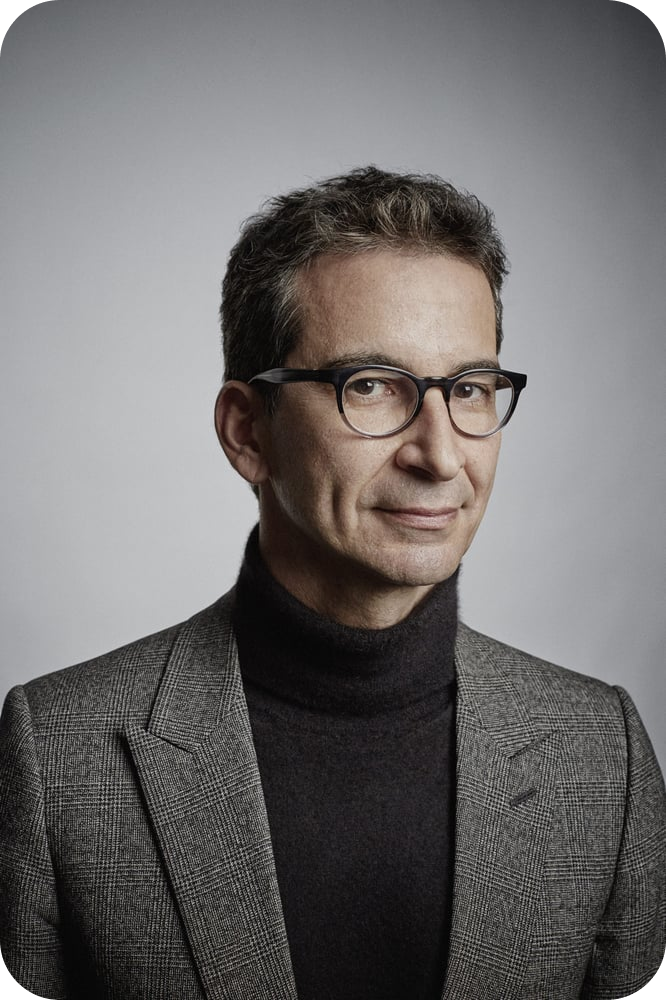
Federico Marchetti is the creator of Yoox Net-a-Porter, which was a listed company and sold for $6 billion. He is on the board of Giorgio Armani, and he most recently published a book that should be required reading for anyone interested in innovation: The Geek of Chic.
Key Takeaways
(0:00 - 6:54) How Luxury Went Online: Federico Marchetti’s Leap from Desperation to a $6B Fashion Empire
(09:19 - 18:01) Beauty, Bold Moves, and Big Mistakes: Federico Marchetti on Building Yoox Net-a-Porter
(18:01 - 27:12) Innovation, Mistakes, and Two Kings: Federico Marchetti’s Lessons from the Top of Fashion-Tech
(32:06 - 38:57) Closing the Sustainability Gap: Federico Marchetti on Fashion, Innovation, and Regenerative Systems
(39:52 - 50:51) Be Brave, Take Risks, and Make a Difference: Federico Marchetti on a Life of Action
📱 Apple Podcasts | 🎧 Spotify | 🔗 iHeart
1. How Luxury Went Online: Federico Marchetti’s Leap from Desperation to a $6B Fashion Empire
The episode opens with Alex giving context: Federico created a company later valued at $6 billion, serves on the board of Giorgio Armani, advises King Charles, and recently wrote The Geek of Chic. But instead of starting with his achievements, Federico goes back to the late 1990s, when nothing about his life looked glamorous.
He explains that he had just returned to Milan after studying at Columbia Business School. He didn’t actually want to move back—his dream was to work in U.S. entertainment companies like Disney or Paramount. But as an Italian without a visa or green card, no American company would hire him. Instead, he ended up at Bain in Milan, doing consulting work that felt completely misaligned with what he cared about. He wanted to work on projects related to customers, retail, and entertainment, but instead found himself buried in PowerPoint and Excel. He jokes that this is why he can’t stand PowerPoint today.
That sense of frustration—feeling stuck in a job he didn’t enjoy and a city he didn’t plan to return to—pushed him to finally pursue entrepreneurship. Federico shares that he came from a humble background: his father worked in a warehouse, his mother was a call center operator, and they lived in Ravenna, a quiet town outside Venice. He describes his childhood as difficult, especially because of his father’s bipolar disorder. Leaving Ravenna at 18 felt like a necessity; returning decades later with King Charles, to show him the city’s ancient mosaics, felt like closing a very deep emotional circle.
From that emotional starting point, he began crafting the idea that would become Yoox. In 1999, combining fashion with the internet was almost unthinkable. He reminds listeners that there was no Facebook, no Instagram, no smartphones, no fast internet—nothing like the digital world we have today. Amazon only sold books. The fashion industry had no online presence at all.
Federico’s insight was that being Italian gave him a unique edge: proximity to the world’s top designers, cultural fluency, and a natural connection to beauty and craftsmanship. He talks about how meeting legendary designers like Armani or Valentino required a certain understanding of etiquette, style, and personality—things Silicon Valley tech founders didn’t necessarily have.
He also shares a smart strategy he used in negotiations: never wear the same brand as the designer you’re meeting. If he went to meet Armani, he deliberately didn’t wear Armani. He didn’t want to appear like he was trying too hard or trying to flatter. He always aimed to stand as an equal in every conversation, whether the other side was a luxury house, Alibaba, or even Jeff Bezos. That mindset—refusing to see himself as “less than”—helped him keep confidence during high-pressure negotiations, even when he had little to lose.
Once he committed to his idea, Federico moved fast. In early 2000, he started searching for funding at a time when Italy had almost no venture capital system. There was only one VC in the entire country. Still, he pushed ahead, building the foundations of Yoox and slowly convincing the fashion world that online retail wasn’t a threat—it was an opportunity.
My entrepreneurial spirit made me feel I shouldn’t be inferior to anyone. And that attitude worked in negotiations—it gave me confidence, because I didn’t feel like I was losing anything. (Federico Marchetti)
2. Beauty, Bold Moves, and Big Mistakes: Federico Marchetti on Building Yoox Net-a-Porter
Federico begins by explaining that in 2000, Italy had only one venture capitalist. Luckily, that single VC came from Olivetti, a company famous for treating design as seriously as technology. Federico shares a little-known story: before creating Apple, Steve Jobs visited Italy to learn from Olivetti’s approach to making everyday tech objects beautiful. That focus on blending form and function helped inspire Apple’s design philosophy.
Alex points out that this connection between beauty and technology is now central to the tech world, and maybe Italy has a natural advantage because beauty is such a normal part of daily life there. Federico agrees. He says Italy isn’t known for innovation in technology, but it excels in design, creativity, and emotional understanding. Growing up in Ravenna—surrounded by its famous mosaics—gave him a strong sense of aesthetics, even though his family lived modestly.
The conversation then returns to the founding of Yoox. Federico reflects on leaving Bain without a backup plan. At 29, single and determined, he “burned the boats” and committed fully to his idea. He secured $1.5 million in funding on March 21, 2000—just weeks before the dot-com bubble burst. Despite the crash, he stayed confident because he believed so strongly that fashion and the internet would eventually come together.
He also talks about acquiring Net-a-Porter, his biggest competitor. It took him five years and three attempts. The first two deals fell apart at the last minute. In English, people say “third time lucky,” and in this case it was true—despite all the cultural and media challenges of an Italian buying a major British company.
But Federico is honest about what happened next. After the merger, he tried to be too polite and too patient with the existing management team, even though he suspected many were trying to undermine him. Looking back, he sees this as one of his biggest mistakes. He says he should have acted quickly and replaced half the team instead of trying to give everyone another chance.
I was lucky with timing and never worried, because I had a strong vision that the internet and fashion would converge. Even crises like the dot-com bubble, 9/11, or COVID didn’t shake my belief. (Federico Marchetti)
3. Innovation, Mistakes, and Two Kings: Federico Marchetti’s Lessons from the Top of Fashion-Tech
Federico explains that while the merger looked like a major success from the outside, it was followed by some very difficult years—and he takes responsibility for the mistakes he made as a leader.
He begins by describing how controversial the acquisition was. The founder of Net-a-Porter didn’t want to sell, and the British press strongly opposed an Italian entrepreneur buying a major British fashion company. Once the merger happened, Federico tried to be polite and diplomatic. He wore Burberry suits, acted like a “British gentleman,” and gave the entire management team a chance to stay. But many leaders inside Net-a-Porter didn’t support the merger and were actively working against him. Looking back, Federico says he should have acted quickly: identify who is with you, and remove those who are not. Instead, he spent two years trying to win people over—time he now sees as wasted.
His second big mistake was technical. Yoox had stronger technology, while Net-a-Porter had serious issues, including a 72-hour outage during Cyber Monday. Instead of simply moving Net-a-Porter onto Yoox’s platform, Federico tried to build a brand-new system for both companies. It was extremely complex and caused major problems. He says he was thinking too far ahead—five or ten years—when he should have focused on what was realistic in the near future. His message: never underestimate technology, and don’t let ambition get ahead of practical needs.
Alex then asks how someone new to innovation can stay creative and keep their company moving forward. Federico says that true innovation starts with thinking differently, not with copying others. It doesn’t always mean making something beautiful—it means seeing things in a new way. He believes brands should aim to be first or unique, not to imitate. Experiments sometimes fail, but if you always focus on the customer, the innovations that matter will stand out. Technology, he says, should always serve the customer—not internal curiosity.
The conversation shifts to the next chapter of Federico’s life. After selling his company for nearly $6 billion, he suddenly found himself working with “two kings”: the King of England and the “king of fashion,” Giorgio Armani. He spent years advising King Charles on sustainability and served on multiple boards linked to the royal foundation. At the same time, he worked closely with Armani, who wrote the foreword for Federico’s book—something Armani had never done for anyone else. Federico speaks emotionally about Armani’s recent passing and his commitment to supporting the brand in this new chapter.
After the sale of Yoox Net-a-Porter, Federico didn’t want to run another fashion brand or follow instructions from someone else. He chose instead to focus on sustainability—something he had cared about long before it became fashionable. Yoox originally grew by giving unsold clothing “a second life,” and Federico always believed that innovation is essential for protecting the planet. He says that without new ways of thinking, sustainability will never progress.
This path led him to King Charles, whom he describes as a pioneer of environmental awareness—someone who began speaking publicly about climate change back in 1970.
To innovate, you need to think differently and ideally be the first, or at least the second, to do something. That requires creativity: developing ideas, business models, new markets, and new features for customers. Always aim to be first and unique.(Federico Marchetti)
4. Closing the Sustainability Gap: Federico Marchetti on Fashion, Innovation, and Regenerative Systems
Federico explains that King Charles has been advocating for sustainability for decades—long before climate activism became mainstream. Federico joined him to create action-oriented initiatives rather than just discussions. One of his projects, Modern Artisan, led him to chair the fashion task force of the Sustainable Markets Initiative, where he brought together major brands like Prada, Armani, Burberry, and Chloé to collaborate on practical solutions. He emphasizes that he acted as a neutral facilitator, a “Switzerland of fashion,” enabling brands to innovate in their own ways while aligning on sustainability goals.
A major innovation Federico implemented is the digital passport. Through QR codes, blockchain, or NFC, customers can access detailed information about each item—its materials, working conditions, repair options, resale value, and recycling instructions. This tool empowers customers to make responsible choices, bridging the gap between brands’ sustainability claims and consumer understanding.
Federico also discusses regenerative agriculture initiatives. For example, Armani now produces organic, regenerative cotton in Puglia, Italy, which replaces conventional polyester. Customers can scan the QR code on the iconic Giorgio Armani T-shirt to see exactly where the cotton comes from—turning sustainability into a tangible, engaging experience. Similar initiatives are happening with cashmere in the Himalayas through Brunello Cucinelli’s brand.
Throughout, Federico highlights that sustainability and innovation go hand in hand: it’s about creating unique experiences, enabling customer choices, and designing systems that give products a longer life while supporting the planet. Alex notes that this approach inspired ideas at RELAYTO, and Federico’s work exemplifies how innovation can be both practical and visionary.
It gives the product longevity and empowers customers to make responsible choices. The problem is that younger generations want to buy sustainable fashion, but they don’t always know if it truly is. (Federico Marchetti)
5. Be Brave, Take Risks, and Make a Difference: Federico Marchetti on a Life of Action
Federico starts by sharing advice from his friend Brunello Cucinelli, who described him as a “philanthropic industrialist” because he uses business to make the world better—not for personal profit, but for the planet and future generations. Federico reflects that this work brings him more satisfaction than wealth ever did. Having already achieved financial comfort, he finds joy in helping companies become more sustainable and innovative.
He also talks about what he learned from two “kings”: King Charles and Giorgio Armani. From Armani, he learned how rare it is to combine creativity and business leadership in the same person. Armani controlled his brand end-to-end—design, operations, and vision—while remaining highly creative. Federico applied this lesson at Yoox, fostering creativity and uniqueness in his team to stand out in a competitive market. From King Charles, he learned the importance of action: even the most powerful people need doers around them to bring ideas to life. Federico shares that the King called him his “Italian secret weapon,” appreciating his ability to get things done.
When Alex asks for advice for others pursuing meaningful work, Federico emphasizes courage, authenticity, and risk-taking. He encourages people to be themselves, make brave decisions, and stay true to their vision, regardless of background or early limitations. Federico’s story is proof that you don’t need to be a programmer, fashion expert, or privileged insider to achieve extraordinary results—intuition, boldness, and focus on the customer can take you far.
The conversation closes with Federico highlighting his book, The Geek of Chic: American Dream, Italian Style, as a guide to inspire the next generation to take risks, embrace creativity, and pursue impactful work. Alex sums it up: Federico’s life shows how technology, fashion, creativity, and sustainability can intersect in one remarkable career.
What works best is to be yourself, to be brave, to take risks, and to be courageous. The bottom line of the book is: if I made it, you can too. I worked with kings and built a company worth billions, but I came from a very humble family in a very small town in Italy. (Federico Marchetti)
Check the episode's Transcript (AI-generated) HERE.