

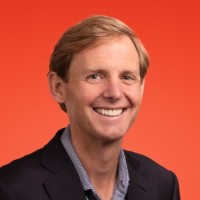
 Nathan Christensen is an entrepreneur, executive coach, and investor with over 15 years of leadership experience in the HR tech and compliance sectors. He is best known as the co-founder and former CEO of Mineral, an HR and compliance platform that he scaled from an early-stage startup to an industry standard supporting over one million small and mid-sized businesses. A "legal eagle" who holds a Juris Doctor (JD) degree, Nathan successfully translated his analytical background into a highly strategic leadership style, moving from a hands-on operator to an empowering "orchestra conductor" executive. Today, he leverages his scaling expertise by serving on the boards of private equity and venture-backed companies, while continuing his entrepreneurial journey as a co-founder of Huckleberry, an AI-native startup dedicated to closing the corporate coaching gap by providing personalized professional mentorship to employees at all levels.
From Phone Books to a Million Users: The Pivot That Saved an HR Startup
When Mineral launched about 15 years ago, Nathan and his team tried to sell their HR compliance software directly to small businesses. While business owners admitted that HR rules and regulations kept them up at night, they didn't want to spend money on an online tool to fix it.
Nathan spent days going door-to-door, but making sales was incredibly slow and painful. Looking back, Nathan notes that their experience wasn't unusual for a new company:
"Our story was the typical story of a lot of startups which is a lot of failures and a lot of mistakes along the way. And we didn't start out partnering with insurance brokers and payroll companies. We actually started out trying to sell our product... directly to small businesses."
The Pivot: Finding the "Trusted Advisors"
Realizing their original plan wasn't working, the team literally opened a phone book to find out who small businesses already trusted. This led them to insurance brokers and payroll companies.
Instead of selling to small businesses one by one, Mineral bundled their software inside the packages that these brokers were already selling. This single shift in strategy allowed them to scale from struggling for sales to serving over a million businesses.
Why Selling Through Brokers is Hard (But Worth It)
Alex and Nathan note that the insurance and payroll industries are not typically known for adopting new technology quickly. It is a traditional, relationship-driven business where brokers face constant pressure from both insurance carriers and demanding clients.
However, Nathan explains that because insurance brokers act as mentors and advisors to their clients, they were the perfect champions for Mineral’s product. The brokers got to offer extra value to their clients, and small businesses finally got the HR help they needed from a source they already trusted.
From Doing It All to Conducting the Orchestra: A CEO's Hardest Lesson
After shifting their strategy to sell through insurance brokers instead of direct to small businesses, Mineral didn't target the massive national companies right away. Instead, they started small.
Start Local: They partnered with small, local brokers to learn exactly what their clients needed and how to talk about their product's value.
Build a Track Record: Once they proved the model worked with local brokers, they used those success stories to pitch larger regional and national firms.
Leverage the Network: Because the insurance industry relies heavily on relationships, brokers started recommending Mineral to one another. Word-of-mouth eventually turned their platform into the industry standard.
The Turning Point: Shifting from "Chief Doer" to "Conductor"
Nathan shares that during the first five years of building the company, he thought being a good CEO meant making every decision, having the best instincts, and running himself ragged trying to do everything. He realized this was actually holding his company back.
A mentor stepped in and changed his perspective using a powerful analogy: A CEO should be like an orchestra conductor.
"You don't see conductors, although they can be very emphatic in their gestures, they're not actually making the noise. They're letting their team make the music."
Nathan realized that by leading from the front and making all roads lead through him, the company could never grow past his own personal limits.
Leading in Times of Chaos
To break this habit, Nathan adopted a philosophy inspired by Eleanor Roosevelt: Good leaders make people trust the leader; great leaders make people trust themselves. He shortened his emails, spoke less in meetings, and focused entirely on putting the right people in the right roles.
Nathan notes that this lesson is incredibly relevant for CEOs navigating today's fast-moving challenges, like geopolitical shifts and the rise of AI. When times get stressful, a leader's instinct is often to jump in and put out every fire themselves. According to Nathan, the real job is to step back, resist the urge to control everything, and focus on creating the conditions for your team to succeed.
Making Your Partners Look Like Heroes: The "Sacred" Rule of Modern Business
Alex kicks off the conversation with a classic historical anecdote comparing two British Prime Ministers, William Gladstone and Benjamin Disraeli:
"After I spoke with Gladstone, I thought he was the cleverest man in all of Britain. And then I spoke to Disraeli and said, 'After I spoke to Disraeli, I thought I was the cleverest woman in all of Britain.'"
Alex uses this to highlight Nathan’s leadership style. Early in their careers, founders love to take "monkeys off other people's backs" and handle problems themselves. However, as a company scales, great leaders stop trying to look like the smartest person in the room. Instead, they shift to inspiring their team and giving them the confidence to solve problems on their own.
Why Human Trust Beats AI Commoditization
Alex and Nathan note that as AI makes it incredibly easy for any company to build software or run marketing campaigns, technology itself is becoming commoditized. In this new era, trust and human relationships are the only things that cannot be easily copied.
Mineral grew exponentially because they didn't just sell software; they built a powerful ecosystem by turning insurance brokers and payroll vendors into an extension of their own team.
The Power of a "Sacred" Business Promise
When asked how Mineral successfully convinced these traditional brokers to hand over their valued clients, Nathan uses a word rarely heard in corporate boardrooms: Sacred.
"When we at Mineral signed a partnership agreement... to us that was a sacred bond because they are handing over their clients to us. And we don't want to do anything to jeopardize that relationship. In fact, we want to make that partner look so good to their clients..."
Nathan explains that building this level of trust requires more than just hiring charismatic sales reps. It has to be baked directly into the company culture:
Create Living Core Values: Mineral established a core value called "We are in this together." They kept this alive not by putting it on T-shirts, but by giving out awards for it and filtering every business decision through how it would affect their partners.
Lead with the Customer: At every single company town hall, Nathan started the meeting with customer satisfaction and Net Promoter Scores (NPS) rather than financial metrics.
Maintain Stakeholder Balance: Mineral operated on a simple loop: happy partners and customers lead to happy employees, which naturally leads to happy shareholders.
Beyond the Hustle: Balancing Bold Action with "Friction-Free" Strategy
Alex points out that Mineral succeeded because it was a "missionary" company built for the long haul, rather than a "mercenary" company just chasing quick cash in trends like AI. Nathan agrees but notes that a founder's greatest strength can easily become their biggest liability.
As a deeply thoughtful and analytical leader, Nathan realized that the first 90% of his personality led to excellent, strategic decision-making. However, the last 10% meant he suffered from "analysis paralysis" and could easily slow the company down.
To fix this, he intentionally filled his leadership team with urgent, highly action-oriented people. This created a healthy tension: Nathan kept the company strategic, while his team supplied the daily urgency to execute those plans.
The "Legal Eagle" Conundrum
Alex highlights a unique detail about Nathan: he holds a law degree (a JD), which is rare for tech entrepreneurs. In compliance-heavy industries, a legal mind is a superpower for mitigating risk and mastering details. However, it can clash with the traditional startup mindset of "moving fast and breaking things."
Nathan jokingly admits to being "afflicted with being overly analytical," but both speakers agree that the magic formula for scaling a business is finding a way to balance vitality (speed and action) with prudence (care and accuracy).
The Strategy Shift: Fuel vs. Friction
Nathan introduces a core business philosophy centered on how to change customer behavior, breaking it down into two distinct methods: Fuel and Friction.
| Strategy | What It Means | Examples |
|---|---|---|
| Adding Fuel | Turning up the volume and amping up the pressure to make a sale or get someone to act. | Aggressive marketing, loud sales pitches, or offering incentives like "six months free if you sign up today." |
| Removing Friction | Looking at the path the customer has to take and removing the invisible hurdles blocking them. | Making software easier to use, shortening forms, or simplifying a sign-up process. |
Nathan admits that for years, Mineral focused entirely on adding fuel—louder messages and bigger incentives. However, he eventually discovered that removing friction is often a far more effective (and cheaper) way to scale a business.
To prove his point, Nathan begins sharing a real-world example from outside the business world, detailing how the U.S. Military once solved a massive recruitment crisis not by spending more on advertising (fuel), but by fixing the invisible bottlenecks where interested applicants were dropping out of the pipeline.
The Invisible Barriers to Growth: Mastering the Art of "Friction-Free" Scaling
How the Military Solved a Recruitment Crisis
Picking up on his "Fuel vs. Friction" analogy, Nathan shares how the U.S. Military struggled to hit enlistment targets despite having plenty of interested applicants at the top of their pipeline. At first, they tried adding fuel—throwing money at the problem through bigger signing bonuses and flashier marketing campaigns. It barely moved the needle.
When they dug deeper, they discovered a major point of psychological friction: young recruits were terrified of having the difficult conversation with their parents about joining the military.
To remove this roadblock, the military trained its personnel to become facilitators for these family discussions, providing tips or even joining the meetings to ease the tension. By removing that single emotional hurdle, recruitment numbers soared.
Modern Examples: The Mattress Dilemma
Nathan and Alex point out that this concept is everywhere in modern business:
The Mattress Industry: For decades, companies struggled to get people to buy new mattresses. The friction wasn't the price; it was the massive hassle of figuring out how to throw away the old one. The industry exploded when companies started offering to haul the old mattress away for free.
The IKEA Effect: On the flip side, Alex jokes that IKEA intentionally creates a specific kind of physical friction—designing a maze-like store layout that makes it almost impossible to leave without buying something extra.
Clearing the Path for Partners: The Mineral Flywheel
Nathan applied this exact lesson to Mineral. Once they established a baseline of trust with their insurance and payroll partners, they stopped focusing on flashy promotional campaigns and started looking for hidden friction in the daily workflow.
They meticulously smoothed out every roadblock they could find, updating their business to include:
Tech Integrations: Making sure their software plugged seamlessly into the platforms the brokers were already using.
Workflow & Billing: Simplifying complex invoicing and pricing structures so partners didn't have to waste time on paperwork.
Nathan notes that eliminating these minor annoyances was far more effective at driving revenue than any marketing campaign they ever ran.
The 3-Year Rule of Industry Trust
Alex notes that while removing friction keeps existing clients happy, you still have to break into the market first. Nathan agrees, emphasizing that building an ecosystem takes massive patience and a "cumulative investment" of time. He summarizes his experience attending the industry's annual conferences:
| Year | The Outsider's Journey |
|---|---|
| Year 1 | Nathan felt completely invisible. Because he was an unknown outsider, nobody at the conference wanted to talk to him. |
| Year 2 | Industry insiders saw he returned and realized he was invested in their world. A few brave brokers took a chance and signed up. |
| Year 3 | The flywheel kicked in. Early clients started recommending Mineral to their peers, launching the company into an exponential growth curve that eventually made them the industry standard. |
Playing the Long Game: Why Unwavering Focus Beats the "Shiny Object" Trap
Nathan notes that service providers, like insurance brokers, are constantly bombarded by tech vendors pitching the "next big thing." Many of these vendors are opportunistic—they jump into a market, try to make quick cash, and vanish a year later.
Mineral won the market by doing the exact opposite. By showing up year after year and contributing actual thought leadership rather than aggressive sales pitches, they proved they were in it for the long haul. This consistency turned them into a permanent, trusted fixture in the industry.
The Power of Focus (and Avoiding the AI Hype Train)
Alex points out that as companies grow, founders face massive pressure from investors to constantly expand, try new things, or pivot entirely because "AI is changing everything." He asks Nathan how he managed to stay so disciplined.
Nathan admits he made mistakes along the way, but he firmly believes that doing a few things exceptionally well beats throwing everything at the wall to see what sticks.
"When we built this partner-centric go-to-market model, our partner DNA became our DNA... I realized that what we knew how to do better than anybody else was partner with these other service providers to deliver our product through and with them."
While Mineral did eventually experiment and expand, they only did so on the product side, keeping their core sales strategy exactly the same. They waited until their core business was running perfectly before flexing their muscles on anything new.
Nathan's Next Act: Closing the Workplace "Coaching Gap"
After stepping down as CEO of Mineral, Nathan took a short break from social media, but he hasn't stayed quiet for long. He has channelled his years of HR tech experience into a brand-new startup called Huckleberry.
While running Mineral, Nathan kept hearing the same three complaints from corporate executives and HR leaders:
High employee turnover (people leaving the company too quickly).
Stagnant professional development (employees not growing fast enough to get promoted).
Absenteeism and low engagement (workers feeling disconnected).
Nathan realized that while these look like separate issues, they all stem from a single problem: a massive coaching gap. Most companies only buy expensive executive coaches for their top leaders, leaving everyday employees to figure things out on their own.
To solve this, Huckleberry was built from the ground up as an AI-native platform designed to provide a personalized executive coach for every single employee in a company, making mentorship and professional growth accessible to everyone.
Where to Find Nathan Christensen
LinkedIn & X (formerly Twitter): Nathan can be found on both platforms, where he plans to share upcoming thought leadership pieces on business strategy and scaling teams.
His New Venture: To see his latest work in action, check out his AI coaching platform, Huckleberry.
Check the episode's Transcript (AI-generated) HERE.
Other Episodes
Godard Abel | CEO of G2
S 01 | Ep 6 Where You Go for Software: Reach Your Peak

Dean Stocker | CEO of Alteryx
S 01 | Ep 8 Turning Your Customers Into Your Biggest Champions

Peter Fader | Co-Founder of Theta CLV
S 01 | Ep 10 Turning Your Marketing Into Dollars
AUTHOR.png)
The fastest way to build digital experiences. We empower businesses to convert PDFs, presentations and other content into interactive experiences & webpages with instant branding, analytics & more


.png)
