Listen to the Podcast Episode on Your Favorite Platform

.svg.png)

The Mind Movie Method
.png)
Your charts and graphs are actually telling stories. Those stories could be about people, or animals—if you're, say, in animal rescue, your charts might be telling that story—or if you're in a climate tech company, maybe the stories are about the Earth. And I will memorize them, and I will remember them, and I will think about that pie chart for a week. (Melissa Reaves)
(0:00-5:43)
Alex introduces Melissa Reaves and her "Mind Movie Method" for storytelling in business. Melissa shares her background in advertising technology startups from 2002-2019, explaining how she naturally excelled at sales through vision storytelling. She describes her early work in behavioral targeting and retargeting, helping ad agencies understand new digital capabilities. The conversation establishes the foundation that human beings naturally connect with stories, even in business contexts where data and charts dominate.
.png)
The Neuroscience Behind Story vs. Data
When you're flashing a chart or a graph, or you say a stat, and you start right there, what happens is our neocortex engages. It's analyzing—it's known as the left brain. It's logical. 'Does this make sense to me?' But it's not emotional. Most of the clients I speak to are in life sciences, they're engineers, they're working in AI, and they work in that neocortex every day for their entire lives. (Melissa Reaves)
(5:43-14:45)
Melissa explains the neuroscience behind why stories work better than raw data for business communication. She contrasts how charts and statistics engage the analytical neocortex with how character-driven narratives activate the limbic system and create mental images. Using a fictional character example, she demonstrates how audiences automatically visualize details when presented with story elements rather than numbers. The key principle emerges: convert statistical data into relatable human experiences first, then support with the numbers. This approach creates memorable, emotionally resonant messages that work especially well for founder pitches and investor presentations where market data needs to feel personal and urgent.
The Wonder Wander Effect - Keeping Audiences Engaged
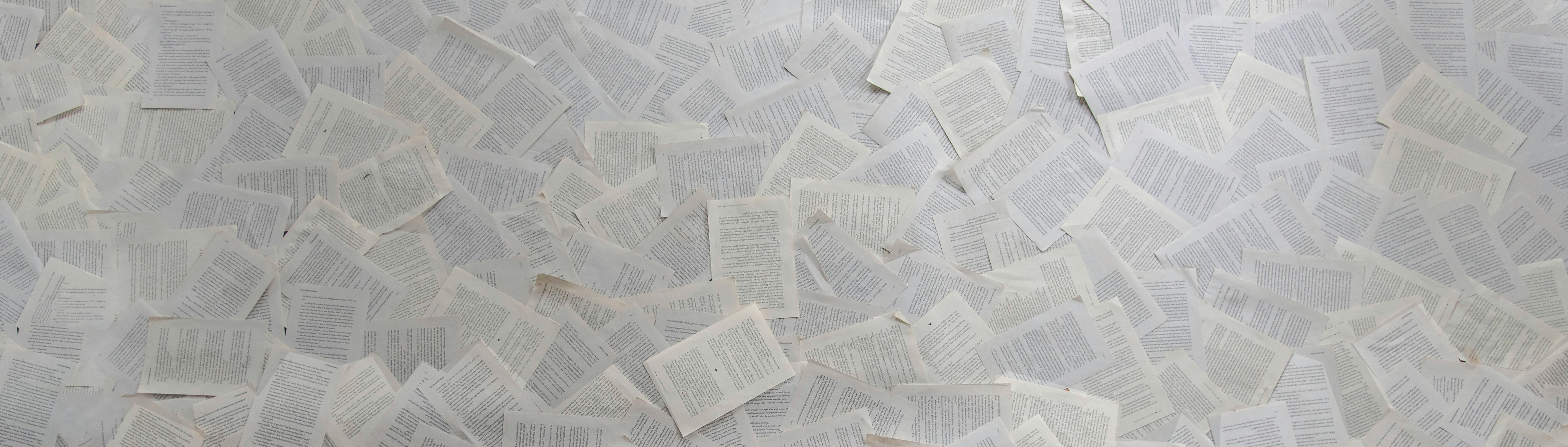
The Wonder Wander Effect means that the speaker has either said something, like using an acronym, and they don't define it. The audience is like, 'What's that mean? I don't know what that means.' He keeps saying 'EBITDA,' and I don't know what that means. Meanwhile, he's still going, and what happens is maybe 30-40% of the room just lost it. They fell off the train tracks of communication, and they don't know what he's talking about. So what I would say is, you always want to define a term. Say it, let everyone know, check in with your audience: 'Does that all make sense?' Then you can start using that acronym. That's polite, and that's conscientious to your audience. It keeps people engaged. They're like, 'Oh, I'm being seen,' and, therefore, I will give the same courtesy back to the speaker because they are paying attention to how they're interacting with us. (Melissa Reaves)
(14:45-19:46)
Melissa explains the Wonder Wander Effect—a common presentation problem where speakers use undefined terms or acronyms, causing 30-40% of the audience to mentally disengage. When someone repeatedly says terms without explanation, portions of the room "fall off the train tracks of communication" and never recover. She recommends defining terms first, checking for audience understanding, then proceeding with shortcuts. This approach demonstrates respect for mixed audiences and creates reciprocal engagement. Melissa shows that even highly technical people respond to creative storytelling elements, proving that thoughtful communication builds stronger connections regardless of audience expertise level.
Three Types of Presentation Decks
There are three types of decks. The first is an internal deck, which is where your data scientists start. They're gathering it all up. It doesn't have to be that pretty... These slides should probably never see the light of day unless it's in the appendix. (Melissa Reaves)
(19:46-24:49)
Melissa categorizes presentation formats into three distinct types: internal decks (data dumps for teams), shared decks (standalone documents that represent you when you're not present), and speaker's decks (minimal text with progressive revelation of points). She explains how most people mistakenly use shared deck slides during live presentations, creating disharmony when audiences read while speakers talk. The solution involves progressive disclosure—showing one point at a time during presentations.
The Future of Interactive Storytelling
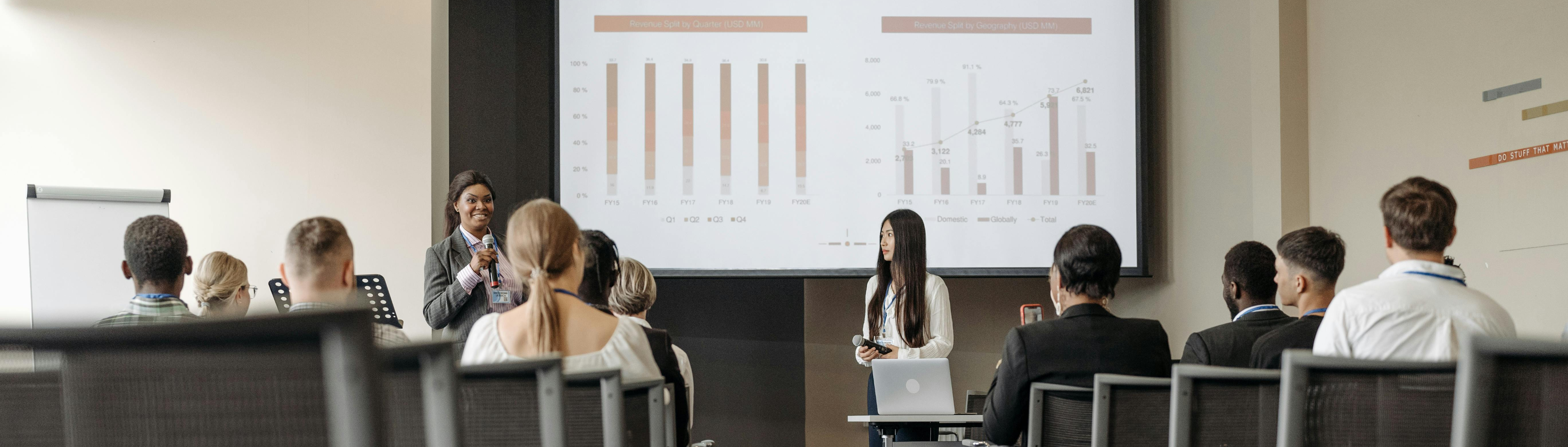
We should be demanding more from ourselves and our speakers to be better presenters, no matter what. I focus on the speaker's deck the most, but every single one of my clients needs a shared deck. It makes sense to me that the shared deck should be dynamic, with the power of sound, video, and movement. (Melissa Reaves)
(24:49-36:32)
Alex and Melissa explore the evolution of business communication beyond traditional static documents. They discuss how audiences now expect more engaging, interactive experiences when consuming important business content. Melissa advocates for dynamic shared decks that incorporate movement, sound, and video to match modern communication standards. The conversation centers on how story libraries can enable self-directed exploration while maintaining narrative engagement, allowing different audience members to access information in their preferred format and depth. They reach the conclusion that effective business communication should adapt to how people naturally consume and process information today.
Live Story Coaching - The CROW Method
When you're telling the story in my method, I call it CROW. So, it's an acronym that stands for Characters, Relationships, Objective, and Where. (Melissa Reaves)
(36:32-44:10)
Melissa demonstrates her CROW method through live story coaching. She breaks down the four essential story elements: Characters (who you're talking about so audiences can see them), Relationships (your connection to those characters), Objective (the stakes - why this story matters), and Where (painting the scene so listeners feel like they're there). Through real-time coaching, she shows how applying CROW can turn a flat business narrative into a memorable story that audiences visualize and connect with emotionally.

Building Story Libraries and Scaling Impact
My goal is to create millions of better business storytellers. That's my goal. And how am I going to do that? I can't talk to a million people myself, right? So, I've created downloadable teaching decks that people can buy. I have the book, I have the companion journal, I have the audiobook, I have a course, I have video courses that you can do because everyone learns in a different way. (Melissa Reaves)
(44:10-51:34)
The final section covers Melissa's Story Library program, where her team helps organizations identify and refine their various story types—vision stories, customer success stories, failure stories, and acquisition stories. She explains how her audiobook features 16 different executives sharing stories to make it "edutaining." Melissa discusses her multiple content formats (book, audiobook, courses, coaching) to accommodate different learning styles. The conversation concludes with her contact information and the various ways she helps leaders, from TED Talk preparation to webinar development and private coaching for discovering personal leadership stories.
Check out the episode's Transcript (AI-generated) HERE.
Other Episodes
Godard Abel | CEO of G2
S 01 | Ep 6 Where You Go for Software: Reach Your Peak


Dean Stocker | CEO of Alteryx
S 01 | Ep 8 Turning Your Customers Into Your Biggest Champions

Peter Fader | Co-Founder of ThetaCLV
S 01 | Ep 10 Turning Your Marketing Into Dollars
Author
Experience-focused Leaders is the #1 Multimedia Podcast! We talk to senior business & tech leaders about the experiences that move forward organizations, customers and society at large. True to form, we mix audio, video, web and eBook formats to turn these authentic conversations into personalized nuggets you'll remember & use.



.png)