

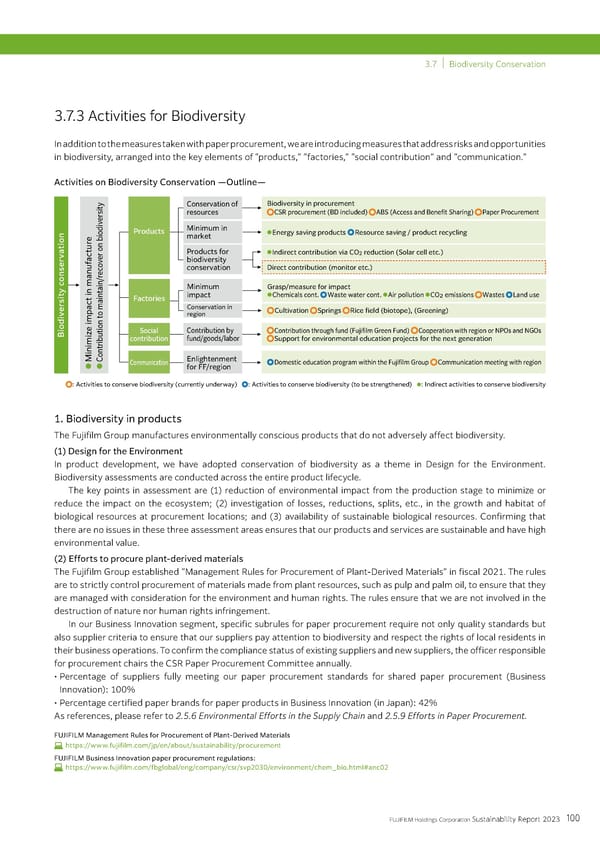
3.7 | Biodiversity Conservation 3.7.3 Activities for Biodiversity In addition to the measures taken with paper procurement, we are introducing measures that address risks and opportunities in biodiversity, arranged into the key elements of “products,” “factories,” “social contribution” and “communication.” Activities on Biodiversity Conservation —Outline— Conservation of Biodiversity in procurement resources CSR procurement (BD included) ABS (Access and Benefit Sharing) Paper Procurement ○ ○ ○ Products Minimum in ●Energy saving products Resource saving / product recycling market ◎ Products for ●Indirect contribution via CO reduction (Solar cell etc.) biodiversity 2 conservation Direct contribution (monitor etc.) Minimum Grasp/measure for impact ●Chemicals cont. Waste water cont. ●Air pollution ●CO emissions Wastes Land use Factories impact ◎ 2 ○ ◎ Conservation in Cultivation Springs Rice field (biotope), (Greening) region ○ ○ ○ Contribution through fund (Fujifilm Green Fund) Cooperation with region or NPOs and NGOs Biodiversity conservation Social Contribution by ○ ○ Support for environmental education projects for the next generation contribution fund/goods/labor ○ Minimize impact in manufactureContribution to maintain/recover on biodiversityEnlightenment Domestic education program within the Fujifilm Group Communication meeting with region Communication ◎ ○ ● ● for FF/region ● : Activities to conserve biodiversity (currently underway) : Activities to conserve biodiversity (to be strengthened) : Indirect activities to conserve biodiversity ○ ◎ 1. Biodiversity in products The Fujifilm Group manufactures environmentally conscious products that do not adversely affect biodiversity. (1) Design for the Environment In product development, we have adopted conservation of biodiversity as a theme in Design for the Environment. Biodiversity assessments are conducted across the entire product lifecycle. The key points in assessment are (1) reduction of environmental impact from the production stage to minimize or reduce the impact on the ecosystem; (2) investigation of losses, reductions, splits, etc., in the growth and habitat of biological resources at procurement locations; and (3) availability of sustainable biological resources. Confirming that there are no issues in these three assessment areas ensures that our products and services are sustainable and have high environmental value. (2) Efforts to procure plant-derived materials The Fujifilm Group established “Management Rules for Procurement of Plant-Derived Materials” in fiscal 2021. The rules are to strictly control procurement of materials made from plant resources, such as pulp and palm oil, to ensure that they are managed with consideration for the environment and human rights. The rules ensure that we are not involved in the destruction of nature nor human rights infringement. In our Business Innovation segment, specific subrules for paper procurement require not only quality standards but also supplier criteria to ensure that our suppliers pay attention to biodiversity and respect the rights of local residents in their business operations. To confirm the compliance status of existing suppliers and new suppliers, the officer responsible for procurement chairs the CSR Paper Procurement Committee annually. • Percentage of suppliers fully meeting our paper procurement standards for shared paper procurement (Business Innovation): 100% • Percentage certified paper brands for paper products in Business Innovation (in Japan): 42% As references, please refer to 2.5.6 Environmental Efforts in the Supply Chain and 2.5.9 Efforts in Paper Procurement. FUJIFILM Management Rules for Procurement of Plant-Derived Materials https://www.fujifilm.com/jp/en/about/sustainability/procurement FUJIFILM Business Innovation paper procurement regulations: https://www.fujifilm.com/fbglobal/eng/company/csr/svp2030/environment/chem_bio.html#anc02 100 FUJIFILM Holdings Corporation Sustainability Report 2023
 2023 | Sustainability Report Page 100 Page 102