

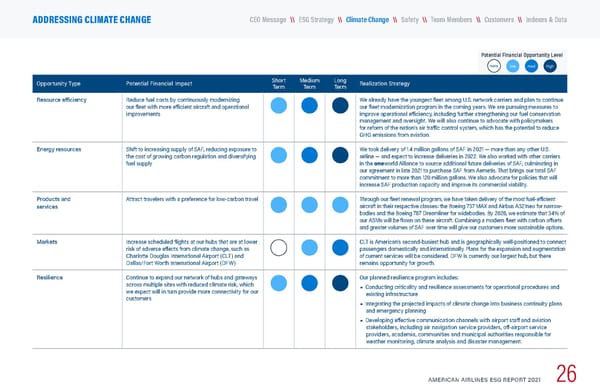
Opportunity Type Potential Financial Impact Short Term Medium Term Long Term Realization Strategy Resource efficiency Reduce fuel costs by continuously modernizing our fleet with more efficient aircraft and operational improvements We already have the youngest fleet among U.S. network carriers and plan to continue our fleet modernization program in the coming years. We are pursuing measures to improve operational efficiency, including further strengthening our fuel conservation management and oversight. We will also continue to advocate with policymakers for reform of the nation’s air traffic control system, which has the potential to reduce GHG emissions from aviation. Energy resources Shift to increasing supply of SAF, reducing exposure to the cost of growing carbon regulation and diversifying fuel supply We took delivery of 1.4 million gallons of SAF in 2021 — more than any other U.S. airline — and expect to increase deliveries in 2022. We also worked with other carriers in the one world Alliance to source additional future deliveries of SAF, culminating in our agreement in late 2021 to purchase SAF from Aemetis. That brings our total SAF commitment to more than 120 million gallons. We also advocate for policies that will increase SAF production capacity and improve its commercial viability. Products and services Attract travelers with a preference for low-carbon travel Through our fleet renewal program, we have taken delivery of the most fuel-efficient aircraft in their respective classes: the Boeing 737 MAX and Airbus A321neo for narrow - bodies and the Boeing 787 Dreamliner for widebodies. By 2026, we estimate that 34% of our ASMs will be flown on these aircraft. Combining a modern fleet with carbon offsets and greater volumes of SAF over time will give our customers more sustainable options. Markets Increase scheduled flights at our hubs that are at lower risk of adverse effects from climate change, such as Charlotte Douglas International Airport (CLT) and Dallas/Fort Worth International Airport (DFW) CLT is American’s second-busiest hub and is geographically well-positioned to connect passengers domestically and internationally. Plans for the expansion and augmentation of current services will be considered. DFW is currently our largest hub, but there remains opportunity for growth. Resilience Continue to expand our network of hubs and gateways across multiple sites with reduced climate risk, which we expect will in turn provide more connectivity for our customers Our planned resilience program includes: • Conducting criticality and resilience assessments for operational procedures and existing infrastructure • Integrating the projected impacts of climate change into business continuity plans and emergency planning • Developing effective communication channels with airport staff and aviation stakeholders, including air navigation service providers, off-airport service providers, academia, communities and municipal authorities responsible for weather monitoring, climate analysis and disaster management. Potential Financial Opportunity Level none low med high AMERICAN AIRLINES ESG REPORT 202s 26 \\ Indexes & Data \\ Customers \\ Team Members \\ Safety \\ ESG Strategy CEO Message ADDRESSING CLIMATE CHANGE \\ Climate Change
 American Airlines ESG Report Page 26 Page 28