

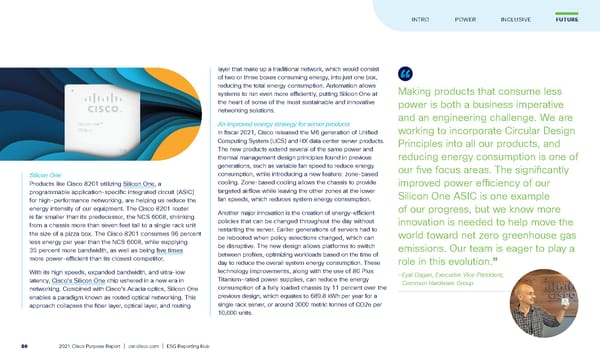
Silicon One Products like Cisco 8201 utilizing Silicon One , a programmable application-specific integrated circuit (ASIC) for high-performance networking, are helping us reduce the energy intensity of our equipment. The Cisco 8201 router is far smaller than its predecessor, the NCS 6008, shrinking from a chassis more than seven feet tall to a single rack unit the size of a pizza box. The Cisco 8201 consumes 96 percent less energy per year than the NCS 6008, while supplying 35 percent more bandwidth, as well as being five times more power-efficient than its closest competitor. With its high speeds, expanded bandwidth, and ultra-low latency, Cisco’s Silicon One chip ushered in a new era in networking. Combined with Cisco’s Acacia optics, Silicon One enables a paradigm known as routed optical networking. This approach collapses the fiber layer, optical layer, and routing layer that make up a traditional network, which would consist of two or three boxes consuming energy, into just one box, reducing the total energy consumption. Automation allows systems to run even more efficiently, putting Silicon One at the heart of some of the most sustainable and innovative networking solutions. An improved energy strategy for server products In fiscal 2021, Cisco released the M6 generation of Unified Computing System (UCS) and HX data center server products. The new products extend several of the same power and thermal management design principles found in previous generations, such as variable fan speed to reduce energy consumption, while introducing a new feature: zone-based cooling. Zone-based cooling allows the chassis to provide targeted airflow while leaving the other zones at the lower fan speeds, which reduces system energy consumption. Another major innovation is the creation of energy-efficient policies that can be changed throughout the day without restarting the server. Earlier generations of servers had to be rebooted when policy selections changed, which can be disruptive. The new design allows platforms to switch between profiles, optimizing workloads based on the time of day to reduce the overall system energy consumption. These technology improvements, along with the use of 80 Plus Titanium-rated power supplies, can reduce the energy consumption of a fully loaded chassis by 11 percent over the previous design, which equates to 689.8 kWh per year for a single rack server, or around 3000 metric tonnes of CO2e per 10,000 units. Making products that consume less power is both a business imperative and an engineering challenge. We are working to incorporate Circular Design Principles into all our products, and reducing energy consumption is one of our five focus areas. The significantly improved power efficiency of our Silicon One ASIC is one example of our progress, but we know more innovation is needed to help move the world toward net zero greenhouse gas emissions. Our team is eager to play a role in this evolution. ” — Eyal Dagan, Executive Vice President, Common Hardware Group FUTURE INTRO POWER INCLUSIVE 2021 Cisco Purpose Report | csr.cisco.com | ESG Reporting Hub 80
 Cisco Purpose Report Page 80 Page 82