

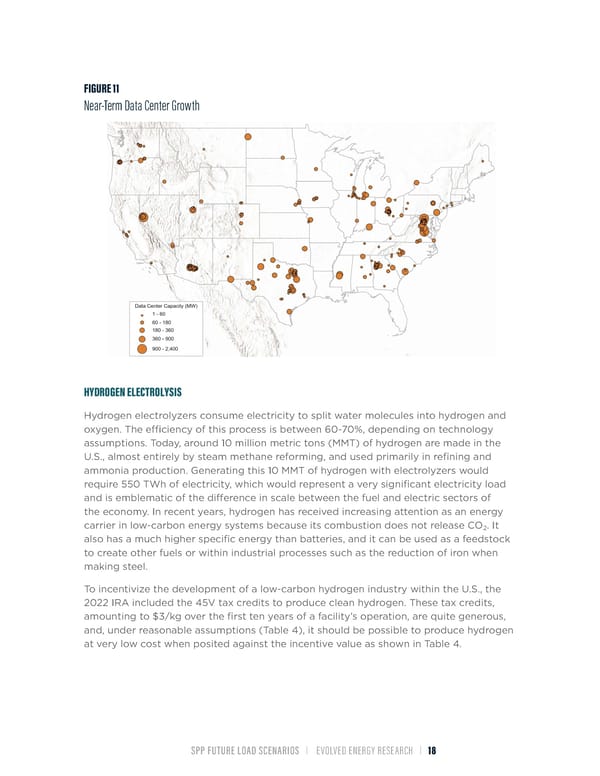
FIGURE 11 Near-Term Data Center Growth HYDROGEN ELECTROLYSIS Hydrogen electrolyzers consume electricity to split water molecules into hydrogen and oxygen. The efÏciency of this process is between 60-70%, depending on technology assumptions. Today, around 10 million metric tons (MMT) of hydrogen are made in the U.S., almost entirely by steam methane reforming, and used primarily in refining and ammonia production. Generating this 10 MMT of hydrogen with electrolyzers would require 550 TWh of electricity, which would represent a very significant electricity load and is emblematic of the difference in scale between the fuel and electric sectors of the economy. In recent years, hydrogen has received increasing attention as an energy carrier in low-carbon energy systems because its combustion does not release CO2. It also has a much higher specific energy than batteries, and it can be used as a feedstock to create other fuels or within industrial processes such as the reduction of iron when making steel. To incentivize the development of a low-carbon hydrogen industry within the U.S., the 2022 IRA included the 45V tax credits to produce clean hydrogen. These tax credits, amounting to $3/kg over the first ten years of a facility’s operation, are quite generous, and, under reasonable assumptions (Table 4), it should be possible to produce hydrogen at very low cost when posited against the incentive value as shown in Table 4. SPP FUTURE LOAD SCENARIOS | EVOLVED ENERGY RESEARCH | 18
 Future Load Scenarios for Southwest Power Pool Page 19 Page 21