

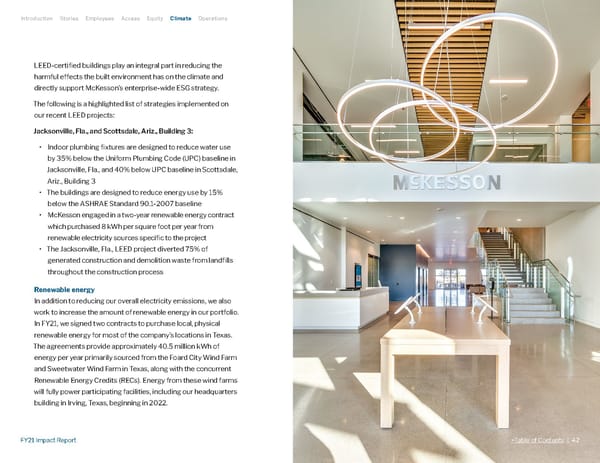
LEED-certified buildings play an integral part in reducing the harmful effects the built environment has on the climate and directly support McKesson’s enterprise-wide ESG strategy. The following is a highlighted list of strategies implemented on our recent LEED projects: Jacksonville, Fla., and Scottsdale, Ariz., Building 3: • Indoor plumbing fixtures are designed to reduce water use by 35% below the Uniform Plumbing Code (UPC) baseline in Jacksonville, Fla., and 40% below UPC baseline in Scottsdale, Ariz., Building 3 • The buildings are designed to reduce energy use by 15% below the ASHRAE Standard 90.1-2007 baseline • McKesson engaged in a two-year renewable energy contract which purchased 8 kWh per square foot per year from renewable electricity sources specific to the project • The Jacksonville, Fla., LEED project diverted 75% of generated construction and demolition waste from landfills throughout the construction process Renewable energy In addition to reducing our overall electricity emissions, we also work to increase the amount of renewable energy in our portfolio. In FY21, we signed two contracts to purchase local, physical renewable energy for most of the company’s locations in Texas. The agreements provide approximately 40.5 million kWh of energy per year primarily sourced from the Foard City Wind Farm and Sweetwater Wind Farm in Texas, along with the concurrent Renewable Energy Credits (RECs). Energy from these wind farms will fully power participating facilities, including our headquarters building in Irving, Texas, beginning in 2022. Introduction Stories Employees Access Equity Climate Operations FY21 Impact Report >Table of Contents | 42
 McKesson ESG Report Page 41 Page 43