

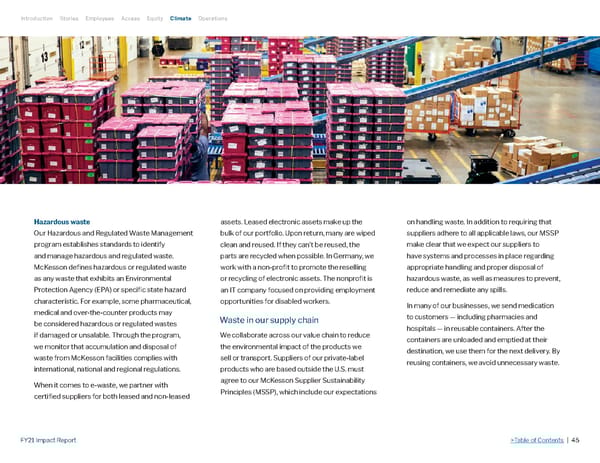
Hazardous waste Our Hazardous and Regulated Waste Management program establishes standards to identify and manage hazardous and regulated waste. McKesson defines hazardous or regulated waste as any waste that exhibits an Environmental Protection Agency (EPA) or specific state hazard characteristic. For example, some pharmaceutical, medical and over-the-counter products may be considered hazardous or regulated wastes if damaged or unsalable. Through the program, we monitor that accumulation and disposal of waste from McKesson facilities complies with international, national and regional regulations. When it comes to e-waste, we partner with certified suppliers for both leased and non-leased assets. Leased electronic assets make up the bulk of our portfolio. Upon return, many are wiped clean and reused. If they can’t be reused, the parts are recycled when possible. In Germany, we work with a non-profit to promote the reselling or recycling of electronic assets. The nonprofit is an IT company focused on providing employment opportunities for disabled workers. Waste in our supply chain We collaborate across our value chain to reduce the environmental impact of the products we sell or transport. Suppliers of our private-label products who are based outside the U.S. must agree to our McKesson Supplier Sustainability Principles (MSSP), which include our expectations on handling waste. In addition to requiring that suppliers adhere to all applicable laws, our MSSP make clear that we expect our suppliers to have systems and processes in place regarding appropriate handling and proper disposal of hazardous waste, as well as measures to prevent, reduce and remediate any spills. In many of our businesses, we send medication to customers — including pharmacies and hospitals — in reusable containers. After the containers are unloaded and emptied at their destination, we use them for the next delivery. By reusing containers, we avoid unnecessary waste. Introduction Stories Employees Access Equity Climate Operations >Table of Contents | 45 FY21 Impact Report
 McKesson ESG Report Page 44 Page 46