

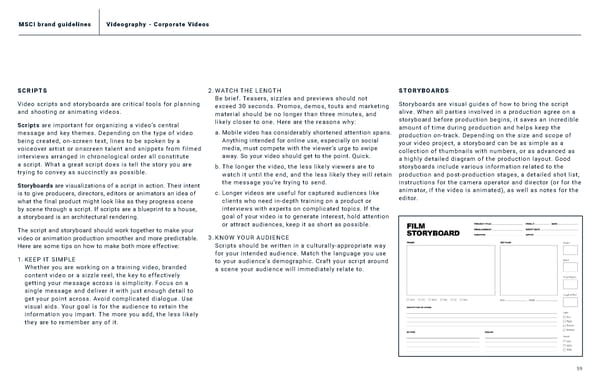
59 MSCI brand guidelines Videography - Corporate Videos SCRIPTS Video scripts and storyboards are critical tools for planning and shooting or animating videos. Scripts are important for organizing a video’s central message and key themes. Depending on the type of video being created, on-screen text, lines to be spoken by a voiceover artist or onscreen talent and snippets from filmed interviews arranged in chronological order all constitute a script. What a great script does is tell the story you are trying to convey as succinctly as possible. Storyboards are visualizations of a script in action. Their intent is to give producers, directors, editors or animators an idea of what the final product might look like as they progress scene by scene through a script. If scripts are a blueprint to a house, a storyboard is an architectural rendering. The script and storyboard should work together to make your video or animation production smoother and more predictable. Here are some tips on how to make both more effective: 1. KEEP IT SIMPLE Whether you are working on a training video, branded content video or a sizzle reel, the key to effectively getting your message across is simplicity. Focus on a single message and deliver it with just enough detail to get your point across. Avoid complicated dialogue. Use visual aids. Your goal is for the audience to retain the information you impart. The more you add, the less likely they are to remember any of it. 2. WATCH THE LENGTH Be brief. Teasers, sizzles and previews should not exceed 30 seconds. Promos, demos, touts and marketing material should be no longer than three minutes, and likely closer to one. Here are the reasons why: a. Mobile video has considerably shortened attention spans. Anything intended for online use, especially on social media, must compete with the viewer’s urge to swipe away. So your video should get to the point. Quick. b. The longer the video, the less likely viewers are to watch it until the end, and the less likely they will retain the message you’re trying to send. c. Longer videos are useful for captured audiences like clients who need in-depth training on a product or interviews with experts on complicated topics. If the goal of your video is to generate interest, hold attention or attract audiences, keep it as short as possible. 3. KNOW YOUR AUDIENCE Scripts should be written in a culturally-appropriate way for your intended audience. Match the language you use to your audience’s demographic. Craft your script around a scene your audience will immediately relate to. STORYBOARDS Storyboards are visual guides of how to bring the script alive. When all parties involved in a production agree on a storyboard before production begins, it saves an incredible amount of time during production and helps keep the production on-track. Depending on the size and scope of your video project, a storyboard can be as simple as a collection of thumbnails with numbers, or as advanced as a highly detailed diagram of the production layout. Good storyboards include various information related to the production and post-production stages, a detailed shot list, instructions for the camera operator and director (or for the animator, if the video is animated), as well as notes for the editor.
 MSCI Brand Book Page 58 Page 60