

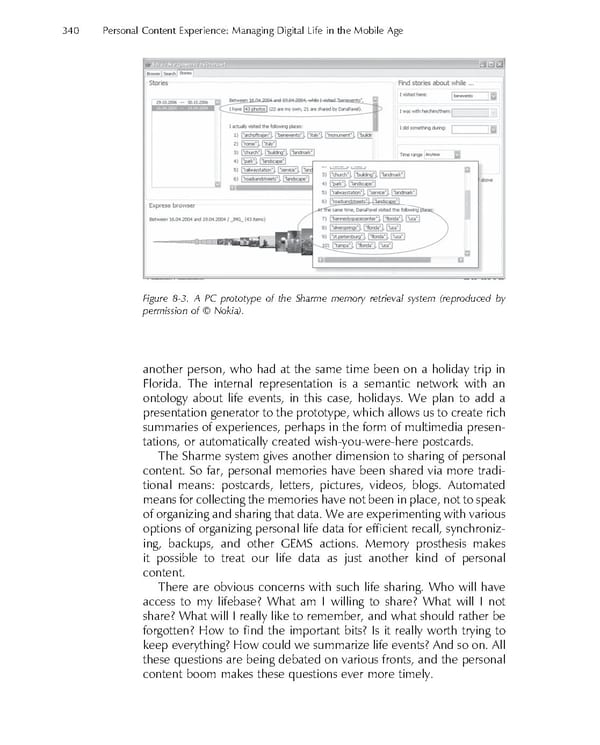
340 Personal Content Experience: Managing Digital Life in the Mobile Age Figure 8-3. A PC prototype of the Sharme memory retrieval system (reproduced by permission of © Nokia). another person, who had at the same time been on a holiday trip in Florida. The internal representation is a semantic network with an ontology about life events, in this case, holidays. We plan to add a presentation generator to the prototype, which allows us to create rich summaries of experiences, perhaps in the form of multimedia presen- tations, or automatically created wish-you-were-here postcards. The Sharme system gives another dimension to sharing of personal content. So far, personal memories have been shared via more tradi- tional means: postcards, letters, pictures, videos, blogs. Automated means for collecting the memories have not been in place, not to speak of organizing and sharing that data. We are experimenting with various options of organizing personal life data for effi cient recall, synchroniz- ing, backups, and other GEMS actions. Memory prosthesis makes it possible to treat our life data as just another kind of personal content. There are obvious concerns with such life sharing. Who will have access to my lifebase? What am I willing to share? What will I not share? What will I really like to remember, and what should rather be forgotten? How to fi nd the important bits? Is it really worth trying to keep everything? How could we summarize life events? And so on. All these questions are being debated on various fronts, and the personal content boom makes these questions ever more timely.
 Personal Content Experience Page 363 Page 365