

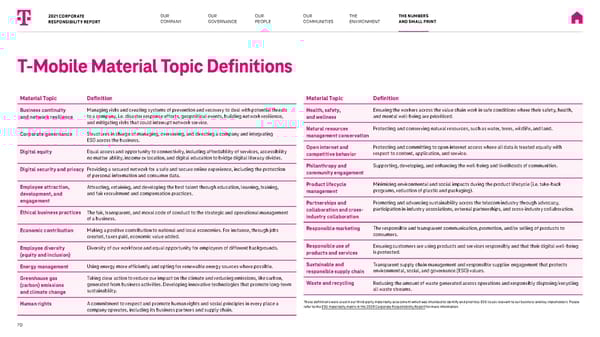
T-Mobile Material Topic Definitions Material Topic Definition Business continuity and network resilience Managing risks and creating systems of prevention and recovery to deal with potential threats to a company, i.e. disaster response efforts, geopolitical events, building network resilience, and mitigating risks that could interrupt network service. Corporate governance Structures in charge of managing, overseeing, and directing a company and integrating ESG across the business. Digital equity Equal access and opportunity to connectivity, including affordability of services, accessibility no matter ability, income or location, and digital education to bridge digital literacy divides. Digital security and privacy Providing a secured network for a safe and secure online experience, including the protection of personal information and consumer data. Employee attraction, development, and engagement Attracting, retaining, and developing the best talent through education, learning, training, and fair recruitment and compensation practices. Ethical business practices The fair, transparent, and moral code of conduct to the strategic and operational management of a business. Economic contribution Making a positive contribution to national and local economies. For instance, through jobs created, taxes paid, economic value added. Employee diversity (equity and inclusion) Diversity of our workforce and equal opportunity for employees of different backgrounds. Energy management Using energy more efficiently and opting for renewable energy sources where possible. Greenhouse gas (carbon) emissions and climate change Taking clear action to reduce our impact on the climate and reducing emissions, like carbon, generated from business activities. Developing innovative technologies that promote long-term sustainability. Human rights A commitment to respect and promote human rights and social principles in every place a company operates, including its business partners and supply chain. Material Topic Definition Health, safety, and wellness Ensuring the workers across the value chain work in safe conditions where their safety, health, and mental well-being are prioritized. Natural resources management conservation Protecting and conserving natural resources, such as water, trees, wildlife, and land. Open internet and competitive behavior Protecting and committing to open internet access where all data is treated equally with respect to content, application, and service. Philanthropy and community engagement Supporting, developing, and enhancing the well-being and livelihoods of communities. Product lifecycle management Minimizing environmental and social impacts during the product lifecycle (i.e. take-back programs, reduction of plastic and packaging). Partnerships and collaboration and cross- industry collaboration Promoting and advancing sustainability across the telecom industry through advocacy, participation in industry associations, external partnerships, and cross-industry collaboration. Responsible marketing The responsible and transparent communication, promotion, and/or selling of products to consumers. Responsible use of products and services Ensuring customers are using products and services responsibly and that their digital well-being is protected. Sustainable and responsible supply chain Transparent supply chain management and responsible supplier engagement that protects environmental, social, and governance (ESG) values. Waste and recycling Reducing the amount of waste generated across operations and responsibly disposing/recycling all waste streams. These definitions were used in our third-party materiality assessment which was intended to identify and prioritize ESG issues relevant to our business and key stakeholders. Please refer to the ESG materiality matrix in the 2020 Corporate Responsibility Report for more information. 2021 CORPORATE RESPONSIBILITY REPORT OUR PEOPLE OUR GOVERNANCE OUR COMMUNITIES THE ENVIRONMENT THE NUMBERS AND SMALL PRINT 70 OUR COMPANY
 T-Mobile Corporate Responsibility Report Page 69 Page 71