

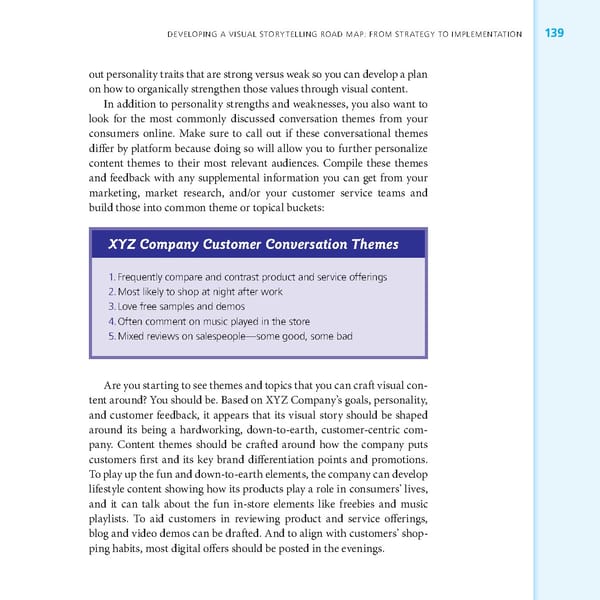
DEVELOPING A VISUAL STORYTELLING ROAD MAP: FROM STRATEGY TO IMPLEMENTATION 139 out personality traits that are strong versus weak so you can develop a plan on how to organically strengthen those values through visual content. In addition to personality strengths and weaknesses, you also want to look for the most commonly discussed conversation themes from your consumers online. Make sure to call out if these conversational themes differ by platform because doing so will allow you to further personalize content themes to their most relevant audiences. Compile these themes and feedback with any supplemental information you can get from your marketing, market research, and/or your customer service teams and build those into common theme or topical buckets: XYZ Company Customer Conversation Themes 1. Frequently compare and contrast product and service offerings 2. Most likely to shop at night after work 3. Love free samples and demos 4. Often comment on music played in the store 5. Mixed reviews on salespeople—some good, some bad Are you starting to see themes and topics that you can craft visual con- tent around? You should be. Based on XYZ Company’s goals, personality, and customer feedback, it appears that its visual story should be shaped around its being a hardworking, down-to-earth, customer-centric com- pany. Content themes should be crafted around how the company puts customers first and its key brand differentiation points and promotions. To play up the fun and down-to-earth elements, the company can develop lifestyle content showing how its products play a role in consumers’ lives, and it can talk about the fun in-store elements like freebies and music playlists. To aid customers in reviewing product and service offerings, blog and video demos can be drafted. And to align with customers’ shop- ping habits, most digital offers should be posted in the evenings.
 The Power of Visual Storytelling: How to Use Visuals, Videos, and Social Media to Market Your Brand Page 152 Page 154