

Top reasons why lists will eat the business world
Why lists are foundation of our culture -- and are more important than ever in the era of content overload
It's natural to jot things down one after the other, but are you getting full value out of your lists? Why should you use lists and are there more things you can use lists for?
1. Lists are a great way to organise your information.If you don't organize your information, it can be scattered everywhere even a regular pin-board can look messy, but if you separate it out into different topics or categories it's a lot less messier. Moving house? Organize what items will go into what room using a list for each room. Planning a wedding? Lists are great for arranging people into different tables.
2. Lists provide a simple structure.There's no deep thinking needed to understand how a list works. Show a Venn diagram to someone, or even a line chart and you still have to explain what the horizontal and vertical axis mean, but a list? No explanation needed, only the topic of the list is needed and it's easy to understand.
3. Lists are easy to read and write.Writing a list? It's simple, straight down the page one line after the next. There's no need for complex sentences, or paragraphs and when you give it to someone to read, they can skim straight down. It's usually easier to identify important points from a list, when compared to chunks of text.
4. Prioritize your day.Busy day ahead? Create a list of all the things that need to be done and then order them in priority and tackle them all. You can break up the list into separate days if there is too much to do in one day. Insert breaks into your list to schedule some 'reward' time or put in some simpler items in between large complex tasks to break up the day. It helps you to make sure that you achieve what you plan to achieve, and can help prevent you from procrastinating.
5. Helps you to arrange things in order.Top ten lists, priority lists, task lists, to-do lists. Simply putting a number in front of each list item helps you to arrange your list into an order that is meaningful. Once you have something in list order, numbering becomes easier. Then if you have to write things out again, you do it based on the numbers you created.
6. Make lists about anything.That's right, anything. Think about all the blog posts that you have read that are lists. All the charts that you have followed. Work in a company? They use lists too, whether it is task management lists, to-do lists. Whenever you're brainstorming what gets written down? Ideas in a list format. Shopping lists, reading lists... heck, everything and anything has been made into lists. Lot's of services already arrange things into lists for you, such as Twitter friends list, Facebook friends list, in fact the newsfeeds that you get from Facebook and Twitter are in a .... List format.
7. Lists are easy to share.Whether you've created it in a computer, mobile app, even on paper, it's easy to share a list. In fact they are engaging and easy to consume. That makes it something that people want to share. Whether it's a list to watch videos or a list of date ideas, when you come across an intriguing list, you feel compelled to share it because you know that your friends are likely to read it too. Even if it's not for entertainment, to-do and task lists can be shared to pool resources and get things done. "Here is a list of things we need to accomplish today, who wants to take on which tasks?"
8. Lists can be about fun things too.It's not all about tasks, to-dos or get things done. It can be about entertainment. Movies to watch lists, playlists, funny jokes lists, top 10 lists. Some of the things I use lists for include a TV shows watch list. New seasons of many shows are about to start, so my list contains the show, channel and day the next broadcast is.
9. Lists can be a good way to collect and bookmark information.Lists can also be used to keep track of all the useful weblinks and articles that you want to read, organized into different categories that can range from news stories, recipes, designs any topic that you can possibly be interested in.
Problems with creating ListsSo there are all these reasons and things to create lists for, but what tools are there? The main problem is if you are using paper then reorganizing your list is problematic. Most tools and apps out there are too focused on tasks and to-do lists, or are purposely only for bookmarking websites. There just isn't something out there that helps you to organize your plans, thoughts and ideas.
Introducing Listible Many moons ago, we created Listible, it was quite a popular way to create lists and organize your thoughts, but unfortunately was killed by Spam. We're re-inventing it and bringing it back to life. We want to make it easy to create any type of list you want. If you're thinking about where to go on holiday, create a list of places you want to visit. If you want to create a list of images from the web, we'll grab the images for you and list them out. Plan of action to arrange an event, create a lost? A friend recommends a book to read? Add it to your book reading list.Want to reorganize the list? we'll let you do that too. Finished something on your movies to watch list? We'll let you archive it.
We're pretty sure that this is something that will be useful for us personally and for Lifehack readers and we want to make sure that we get it right, so here's where you can help us. We're still developing it right now, so it's a great time to chime in your ideas, you can do this by signing up to the beta version from this page, we'll contact you back so you can let us know how we can make this into something you'll love to use.
Sign Up For Listible Featured photo credit: Image of female hand with pen via Shutterstock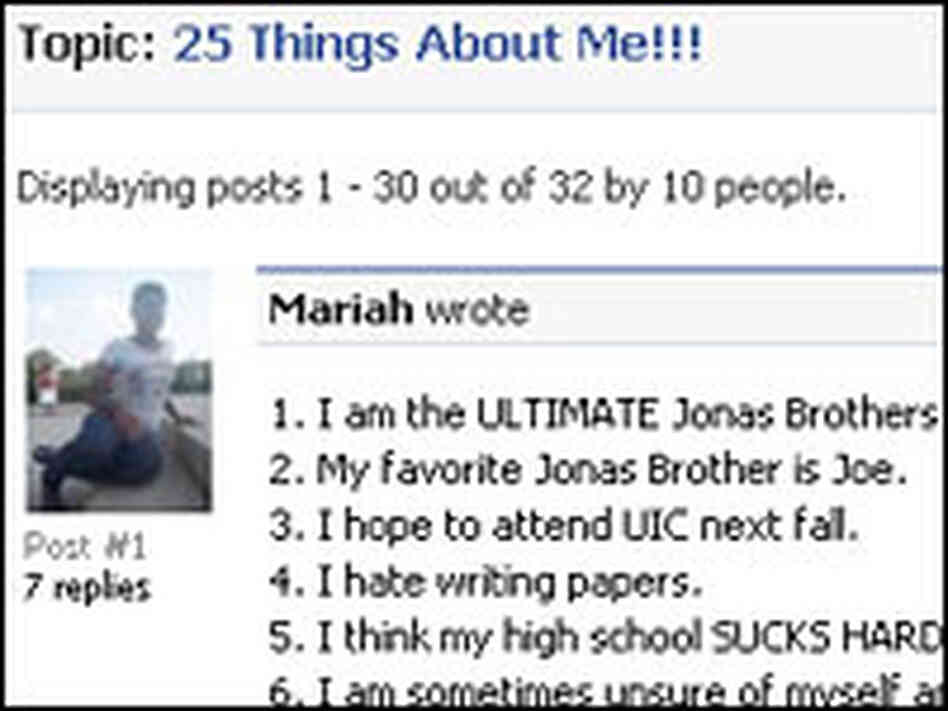
Why is it that everywhere you turn there's a list for this or that?
On Facebook, friends recently began posting 25 Random Things About Me - which bloggers have been doing for years. Now some people are lambasting the listiness while others are shortening it to a more manageable 3 Random Things (3 Places I Have Lived or 3 TV Shows I Watch).
Other Facebook and MySpace lists abound: 6 Great Books. 8 Favorite Songs. 7 Reasons to Hate ... Whatev.
David Letterman's Top 10 List has become a bona fide art form. And there's a list of Top 5 Musicians on Twitter floating around.
Everyday parlance is littered with lists: laundry, grocery, honey-do. When Dick Cheney was asked by then-presidential candidate George W. Bush to find him a suitable running mate, Cheney did what all pols would do: He drew up a short list. (And then he wound up as the VP pick.)
"Enough organization, enough lists and we think we can control the uncontrollable," observed a character on the TV show House. By now you would think there are enough lists. But still we keep jotting things down in an orderly fashion.
Why do we love lists? Let us count the ways:
1. Lists bring order to chaos. "People are attracted to lists because we live in an era of overstimulation, especially in terms of information," says David Wallechinsky, a co-author of the fabulous Book of Lists, first published in 1977 and followed by subsequent editions. "And lists help us in organizing what is otherwise overwhelming."
2. Lists help us remember things - at the hardware store, for the vacation trip, Christmas presents. The One Planet Education Network, or OPEN, is a global online education content provider that counts Harvard and Columbia universities as clients. OPEN also swears by lists. "Checklists help you remember what you have done and what you have to do," the curriculum reminds the students.
3. Most lists are finite. They don't usually go on and on. And if they do, you can skip to the bottom of the list. The Internet Movie Database, for instance, lists its "bottom 100 movies as voted by users." The winner - er, loser - is Zaat, a 1975 sci-fi fiasco.
4. Lists can be meaningful. The Steven Spielberg classic Schindler's List is based on the true story of a German businessman who used a list of names to save more than 1,000 Jews from the concentration camps. It is ranked eighth on the American Film Institute's 2007 list of 100 top American films of the past 100 years.
5. Lists can be as long or as short as necessary. Jamie Frater, a New Zealand opera singer, maintains a list-keeping site called The List Universe. Recent posts include "20 Great Quotes from Ronald Reagan" and "Top 10 Codes You Aren't Meant to Know." A list, Frater says, should be "as long as is necessary. Some lists need be only a few lines an item, others a few paragraphs. I seldom write more than one paragraph, but occasionally the need arises to do so." Frater adds, "This question is a bit like asking an artist: 'When is the painting finished?' It is when it is."
6. Making lists can help make you famous. Notable list makers include Thomas Jefferson, Peter Mark Roget, Martha Stewart and Benjamin Franklin. "A methodical and wry man," wrote Franklin biographer Walter Isaacson in Time magazine, "Franklin loved making lists. He made lists of rules for his tradesmen's club, of synonyms for being drunk, of maxims for matrimonial happiness and of reasons to choose an older woman as a mistress. Most famously, as a young man, he made a list of personal virtues that he determined should define his life."
7. The word "list" can be tracked back to William Shakespeare, according to the Oxford English Dictionary. In Hamlet, the Bard refers to "a list of landlesse resolutes."
8. Lists relieve stress and focus the mind. "Lists," sociologist Scott Schaffer told The Oregonian newspaper, "really get to the heart of what it is we need to do to get through another day on this planet."
9. Lists can force people to say revealing things. In his 25 Random Things roster, former California Gov. Jerry Brown reveals that his favorite cereal is ... Flax Plus Multibran.
10. Lists can keep us from procrastinating. We put this one off until the end. Making a list enables us to get our heads around really big tasks - and helps us tackle the work one aspect at a time. But a list is only useful if it reveals a truth, solves a problem or leads to action. Making a list, for instance, does not necessarily help procrastinators. As DePaul University psychologist Joseph Ferrari told Psychology Today in 2008, people don't put off work they must do because they lack list-making skills. And, in turn, making a list does not get the job done.
 We are a society of listers. Grocery lists, to-do lists, bestsellers lists, the "25 Random Things About Me" meme on Facebook that generated almost 5 million notes in one week. Mainstream magazines feature them, entire websites are devoted to them. Even museums have begun celebrating them: the Smithsonian organized an exhibition two years ago titled, simply, " Lists," which featured examples of the form by the likes of H.L. Mencken and Picasso. (The latter's handwritten 1912 list recommended artists for inclusion in the first-ever Armory Show.) The year before that, the Louvre invited Italian writer Umberto Eco to curate an exhibition and event series based on a theme of his choosing. His idea? " The Infinity of Lists."
Eco also published a lavish and philosophical coffee-table book under the same title. In doing so, he added to the growing field of list literature. This genre boasts in its ranks everything from academic studies to journals that invite the reader to list her way to self-discovery, to 100 Facts about Pandas.
In the U.S., we often laud things by naming months after them. December might then be proclaimed "Lists Month." At that cold, reflective time, year-end best-of's inundate us like blizzarding clumps of snow. How do we navigate our way through them? Why do we love them so much?
Dictionary.com includes one "glazomania: a passion for listmaking." Merriam-Webster doesn't have a similar entry... yet.
What, exactly, is the list doing to-or for-us?
***
8 Tricks for Putting Off a Haircut. 12 Globe-Shaped Foods. Top 10 Famous Buses. 40 Culturally Relevant Birds. 13 High-Tech Steampunk USB Flash Drives. The 10 Most Phallic Cars. Top 10 Evil Sports. 5 Insane Celebrity Conspiracy Theories (That Make Sense). Top 10 Weirdest Twin-Crime Stories. Top 10 Strange and Bizarre Dead Bodies. The 10 Hottest Women on the Texas Sex Offenders List. 25 Sexy Chests to Be Thankful For. 9 Surprising Things Men Look for in a Wife. Top 10 Ways to Piss Off Your Wedding Planner. The 4 Worst Times to Be on the Internet. Ways I Am Prematurely Mature. Inconsistencies Between Original Star Wars Trilogy and Prequels. Things I Would Do to Fix the Mets. Indian Film Songs in Kharahara Priya Ragam. Top Excuses Women Give Not to Have Sex. Random Things I'm into Lately. Expensive Things I Need to Buy Someday. Cool Hoodies for Hackers. 100 Things in the World I Love. Lists to Make. Indicators that You Might Need to Focus More...
***
1. "The list is the origin of culture. It's part of the history of art and literature. What does culture want? To make infinity comprehensible. It also wants to create order-not always, but often. And how, as a human being, does one face infinity? How does one attempt to grasp the incomprehensible? Through lists, through catalogs, through collections in museums and through encyclopedias and dictionaries."
-Umberto Eco, interview with Der Spiegel
2. "Lists help us manage the chaos of our lives-to impose order, if only for a moment. Writing a list clears the mind. ... Once everything is written down, it's easier to see which tasks are important and in what order to tackle them. Tasks that seem overwhelming look easier when reduced to mere lines on paper."
-Sasha Cagen, To-Do List: From Buying Milk to Finding a Soul Mate, What Our Lists Reveal About Us)
3. "To my mind, the difference would be where lists support your quality of life or where they begin to impede your quality of life-where having your list perfected gets in the way of your functioning, or having too many lists. It's a matter of how you use them. They can give you control in a certain way, but you don't want them to be the only thing you do to gain control."
-Dr. Cynthia Green, clinical psychologist and brain health/memory specialist, interview with the author
***
According to Robert Belknap in his book The List: The Uses and Pleasures of Cataloguing-a study of literary lists, particularly in the work of four American Renaissance authors-lists of sequential signs appeared as early as 3,200 B.C.E. Used as a means of accounting and record keeping, they signified an early form of communication that would evolve into written language. If this is true, then Eco is right: the list is the origin of culture.
In his own book, Eco goes back to ancient history to find examples of literary lists. Homer, in The Iliad, spends 350 verses naming generals and ships in the Greek army. Eco gives us lists contained in the works of Virgil and Dante, the Bible, Milton's Paradise Lost, and on through the centuries.
***
The bestseller list, though not quite so old, has deeper roots than we might expect. Harry Thurston Peck compiled and published the first one in February 1895, in The Bookman magazine. Publishers Weekly caught on and inaugurated its own bestseller list in 1912. The ranking-by-sales trend spread to other industries. Billboard began releasing music charts in the 1930s and inaugurated the Hot 100 in 1958.
It's easy to see how critics might regard these types of lists with indifference bordering on disdain. They're a useful tool for publishers, distributors, and everyone on that side of an industry, but they're a real downer for critical authority. Who cares what people are actually reading-we want to tell you what you should be reading! We'll keep it simple, though; we'll give you lists, too.
One wonders which critic penned the first top 10, and when. What magazine or newspaper was it for?
"Pauline once called me a 'list queen' to my face," wrote film critic Andrew Sarris in 2001, after the death of his critical rival, Pauline Kael. "...[I]t started me thinking. To my knowledge, Pauline was the only critic never to compile a 10-best list. Her admirers might say that Pauline was above such trivial journalistic diversions. But with a 10-best list, a critic puts his or her tastes on the line, and makes an easier target than one would get, for example, by plowing through Pauline's stream-of-consciousness prose."
***
If the list is the origin of culture, then all culture springs from the compulsion to order. In other words, the to-do list I make as a private individual is an unlikely sibling of the "Top 10 Exhibitions of This Year" list I write as a critic: both reflect me trying to manage the chaos of the world. The grocery list I jot down when I decide to bake brownies is, I would venture, a cousin. (Trying to manage the chaos of the supermarket.) What do we make of this?
Another question: What happens when so many lists vie for supremacy? The Publishers Weekly bestseller list dukes it out with the New York Times bestseller list; the New York Times bestseller list takes on the Time critic's top picks list; the Time critic's list faces off against the Entertainment Weekly critic's list; the Entertainment Weekly critic's list goes blow-for-blow with an Amazon user's Listmania list. And then there's your friend with the blog you like-you know, that one. He's got his own lists of books you should read, too.
***
To mark the tenth anniversary of September 11, New York magazine created an encyclopedia of 9/11, an alphabetical ordering of phrases and symbols: "Irony, The End of" preceded "Islam," which led to "Jumpers." It was, the editors wrote, a reaction to the overwhelmingness of the event, an attempt "not to shrink from its scale but to embrace it."
The encyclopedia builds on our usual method of collective remembrance for tragedy: listing the names of people who died. The etched walls of Maya Lin's Vietnam Veterans Memorial, the reading of the names on Holocaust Remembrance Day-these are attempts at comprehension in lieu of comprehensiveness. Listing as an imposition of form on a mess of history and memories.
***
The list is omnipresent, and in that sense, it's a bit like God: existing all around us, capable of assuming many different forms, a way to structure our lives. "Thirteen are the ways that God is good," goes the song that Jews sing on Passover. The whole song is, in fact, a list-from one through thirteen, each number represents a different tenet of Judaism. "Eight are the days before a bris," and so on. As a kid, I bellowed those words in a gymnasium filled with hundreds of other Jewish kids dressed awkwardly in their holiday best. We would stand on the laminated benches of the cafeteria folding tables and yell-sing the number corresponding to our grade-"FOUR ARE THE MOTHERS!!" We did that for eight years (we didn't have a high school; I don't remember who filled in numbers nine through thirteen in the song), always trying to be louder than the other grades.
***
Let's talk about the Internet.
The Internet has been to lists what it was to home videos and amateur porn: the great enabler. In his book Belknap calls it "the apotheosis of the list." There are simply more lists on the Web than could ever possibly be useful, or enjoyable. Wading through it all-publications that offer them both earnestly and ironically, user-based sites that let you generate and vote on them, various tools and apps for making and managing them-it's hard not to feel the water rising around your waist.
Even the way we navigate the Internet and get information-by typing a query into a search engine-results in a stack of links. If you use Google, you'll get anywhere from one to three more lists on the left side of the page, representing ways to edit and refine your search. At the bottom, a two-column list of related searches will appear, and below that a horizontal list of more pages. You are boxed in. The list is inescapable. It is helpful, but it is also confining, organized yet overwhelming. On the Internet, the consummate mechanism for controlling chaos struggles not to become a form of chaos itself.
***
Contrary to popular belief and much critical ire, the Internet did not beget the listicle (a portmanteau of "list" and "article"). Magazines did. But the Internet offered a garden in which this hybrid journalistic form could grow and spread its seed. Not only that, but because the listicle and its fellow species, the slide show, could be broken up into multiple pages and thus induce people to click through, slide by slide, some people believe this genus provides part of the answer to the nagging question, how can websites make money?
Though I can't do the precise math, the model looks something like this:
More slides=more pages=more page views=more ads=more money.
Among other places, listicles and slide shows have found a home at the cultural commentary website Flavorwire. Its editors have perfected the art of turning any given topic into a list or slide show. Speaking with me about a recent post that could have run as an essay but was instead broken into a top-10 slide show, managing editor Caroline Stanley said: "I think couching it like that makes it more accessible. Slide shows are obviously generating page views, but I always try to think of myself as the reader first. Breaking 3,000 words into something that's less intimidating to look at is important; it helps people move through something. ... I think there's nothing, for the Web, worse than looking at this page where it's a few thousand words to get through."
Maybe Nicholas Carr is right-maybe we are deep in The Shallows, and the Internet has changed the way we read and think. Shorter attention spans. More pages. Less writing per page. Pictures! LISTS!
***
I recently met the culture editor at an esteemed magazine that produces a lot of lists. When asked about them, she replied that she finds something incredibly satisfying about the process of clicking through a slide show.
This comment bounced off my brain like a rubber ball. I despise clicking through slide shows. I'm not sure what this says about me. Either I represent the past, when we used to read articles all on one page, or maybe two or three pages, but certainly not ten (unless it was in The New Yorker); or I represent the future, a world in which our attention spans are too short even for slide shows and all we want are clean, simple lists.
***
I write a lot of lists. These days I probably make a to-do list a day, in addition to the others I keep floating around: story ideas, exhibitions I want to see, people I've slept with. But I don't want to share them with you. Do you want to read them? I doubt it. And I'm not sure I want to see yours.
The Internet has this funny tendency, though: it turns us inside out and makes us into narcissists. On the Internet, we suddenly think most of what we have to say is interesting and worth sharing with the world. Enter listography.com.
The website was founded by Lisa Nola and her partner, Adam Marks, in 2006 (they've also published an accompanying series of fill-in-the-blank, diary-like journals). It provides a platform for users to create lists of any kind; people use it for everything from daily to-dos to television episodes (yes, episodes, not shows) watched in a given year, to places they want to travel. Each listographer gets a page, for which he or she chooses a background theme. The lists are laid out on top of it, like pieces of paper arranged neatly on a desktop.
On the site, Nola and Marks bill the project as autobiography through list making: "A listography is a perpetual work in progress, a time capsule, and a map of your life for friends and family." Fair enough-except that traditionally, personal lists are more like diaries than autobiographies. In fact, they often go in diaries. Do we really want to read the private musings of strangers? I had thought that kind of interest extended only to people we love or dead celebrities.
But I was wrong! Not since the coming of Live Journal and Blogger and MySpace and Facebook do we only care about the quotidian existences of those we know (or think we know). We are equal-opportunity snoopers now.
"When we were building the site, it was a time when social networking was really popular," Nola told me. "A lot of this became a question of, would people want to share their lists publicly, and would that be the majority? We had to figure out what the overall picture would be." In the end, as with so much of the Internet, the overall picture was public sharing.
***
Possible reasons we make and share lists:
1. Maybe it's about helping ourselves.
Psychologist Dr. Green: "The bulk of information we come across that really matters to our functioning is information that we need to remember for a short time but that we don't, over the long run, need to commit to memory. Those are the things we keep in a calendar or on a list. Lists and other organizational techniques play a very important role in keeping track of that information and helping us function well. I think we feel better when we're organized. It feels good to get things done."
2. Maybe it's about having an "expert" help us.
Author Sasha Cagen, on her website: "As the world's leading todolistologist, I'm all about breaking down your big dreams into manageable steps and fully celebrating every crossed-off item along the way so you ENJOY the process of doing."
3. Maybe it's about helping each other.
Listography's Lisa Nola: "A lot of people enjoy sharing and commenting and being inspired by other people. I made some lists about her [Nola's mother, who died of cancer last year] that were really private, but I made them public at the time. It was the same way people use any social media website-it was sort of reaching out for comfort. A lot of people reached out, and I was surprised at how comforted I was."
***
When you think about it, list making has a kind of creative limit: it's mostly aggregation, filling empty spots with preexisting items. But choosing those items is often an assertion of power, an act of curation: what doesn't make the cut is as important as what does.
Today, though, as we increasingly rely on obscure knowledge for novelty, what kind of power does list making give us: the supremacy with which to name globe-shaped foods? A fine eye for spotting the 10 hottest women on the Texas sex offenders list? I worry that we find ourselves knowing a lot, so little of it worth knowing. We risk becoming masters of our own triviality.
Eco, in his interview with Der Spiegel, said, "The list doesn't destroy culture; it creates it." This may once have been the case, but it isn't anymore. For better or for worse, the list now recycles culture. Where once it bred, today it borrows.
Related: 100 Great (Not Best) Songs of 2011 and How Much More Do Books Cost Today?
Jillian Steinhauer writes about art, comics, and other things that strike her fancy for places like the New York Observer, Guernica Daily, Hyperallergic, and The Jewish Daily Forward. Like you and all your friends, she's on Twitter. Image: A page from Madonna's to-do list in 1990, courtesy of Gotta Have It, via Lists of Note.


1.
Recently, a close friend sent me an e-mail with the subject line "Things I've Noticed As I Get Older." The ten numbered observations ranged from the mundane (politics is getting stupider) to the poignant (the distant melancholy of Facebook's News Feed, with its dispatches from lives that were once, and now no longer, close to one's own). But with all due respect to the observational chops of my correspondent, it wasn't so much the content of the message that impressed me as its form. It was an e-mail in the shape of a listicle, a personal correspondence structured for the purposes of frictionless social-media sharing. At some level, it seemed, my friend intended his e-mail to go viral within the highly targeted demographic of me. I couldn't help feeling that some basic epistolary protocol had been breached, that I was seeing an early sign of what could be a shift in the way people communicate. In the not too distant future, all human interactions, written or otherwise, might well be conducted in the form of lists-for ease of assimilation, for catchiness, for optimal snap. I imagined myself, some decades from now, nervously perched on the papered leatherette of an examination bed, and my doctor directing her sad, humane eyes at me a moment before clearing her throat and saying, "Top Five Signs You Probably Have Pancreatic Cancer."
2.
I'll admit that the above is a little on the fatalistic side, but we all recognize that the list is the signature form of our time. ("37 Pictures That Will Restore Your Faith in Pit Bulls." "15 More Bizarre Kiddie Cartoon Conspiracy Theories." "The 12 Meanest Ways to Tip a Waiter." "22 Pictures of Miley Cyrus' Open Mouth.") The stream of content that rushes through our lives often seems like an absurdist spectacle of randomly generated specifics, a comic nightmare of futile enumeration. The point of counting is, in a way, to get to the end of counting; but this is a counting that admits of no conclusion-a bottomless inventory of everything and nothing. ("8 of the Most Inappropriate Moments from Last Night's VMAs." "13 Signs You're Addicted to Lip Balm." "7 Disney Cartoons You Should Definitely Go Back To." "6 Animals With Sex Lives That Are Weirdly Human.")
3.
Last month, as an exercise in outside-the-box advertising in conjunction with their corporate sponsor Pepsi Next, BuzzFeed launched something called the ListiClock, a Web page that displays a flip clock with a BuzzFeed listicle for every hour, minute, and second of the day. As of this writing, for instance, the time is precisely 2:27:47 P.M., and this fleeting moment is illustrated by the following listicles: "2 Messages from the Romney Campaign," "27 Toys You Threw Out That Are Worth a Fortune Now," and "47 Superb Owls." (I clicked on the owls, fearing that I would never again have a chance to see them; they were, to be fair, uniformly superb.)
4.
The seconds flip by with such remorseless speed that it's almost impossible to read the title of one listicle before it's replaced by another. The result is an endless succession of half-glimpsed enticements: "18 Things You Probably Didn't ...," "11 Reminders That ...," "29 Most Interesting ...," "20 Breathtaking Photos of ... ." If you watch any clock for long enough, especially one that displays the seconds as they pass, a particular kind of despair sets in. Here, now, is a time that will never be again; and now-this exact moment-is already gone; and you are now one second closer to death, etc. The ListiClock, with its unceasing enumeration of enumerations, heightens this anxiety. It not only becomes an intense reminder of the ongoing depletion of our store of moments but also points to a means of depleting them that is, arguably, among the most fruitless of all: diversion unto death. This is probably not the kind of brand extension that Pepsi Next had in mind with their sponsorship of the ListiClock.
5.
In an interview with The Paris Review twenty years ago, Don DeLillo mentioned that "lists are a form of cultural hysteria." From the vantage point of today, you wonder how much anyone-even someone as routinely prescient as DeLillo-could possibly have identified list-based hysteria in 1993. DeLillo's statement also hints at something crucial about the list as a form: the tension between its gesturing toward order and its acknowledgement of order's impossibility. The list-or, more specifically, the listicle-extends a promise of the definitive while necessarily revealing that no such promise could ever be fulfilled. It arises out of a desire to impose order on a life, a culture, a society, a difficult matter, a vast and teeming panorama of cat adorability and nineties nostalgia. Umberto Eco put it dramatically: "The list is the origin of culture. It's part of the history of art and literature. What does culture want? To make infinity comprehensible. It also wants to create order."
6.
But even the most definitive-seeming inventories are always undermined by a sense of their own arbitrariness. There's an absurdity-a hysteria-that lurks between the lines of the most stern and sober of lists. Whoever wrote the Ten Commandments (or "10 Judeo-Christian Moral Injunctions You Need in Your Life Right Now") was surely aware that it could just as well have been eight, or eleven, or seventy-seven commandments. (You get the sense that God, or whoever, could have gone on prohibiting and decreeing things all day, but that He was well aware of His people's already compromised powers of attention.)
7.
The rise of the listicle obviously connects with the Internet's much-discussed effect on our ability (or desire) to sit still and concentrate on one thing for longer than ninety seconds. Contemporary media culture prioritizes the smart take, the sound bite, the takeaway-and the list is the takeaway in its most convenient form. But even when the list, or the listicle, has nothing really to do with useful information, it still exerts an occult force on our attention-or on my attention, at any rate. ("34 Things That Will Make '90s Girls Feel Old." "19 Facts Only a Greek in the U.K. Can Understand." "21 Kinds of Offal, Ranked By How Gross They Look.") Like many of you, I am more inclined to click on links to articles that don't reflect my interests if they happen to be in the form of countdowns. And I suspect my sheep-like behavior has something to do with the passive construction of that last sentence. The list is an oddly submissive reading experience. You are, initially, sucked in by the promise of a neatly quantified serving of information or diversion. There will be precisely ten (or fourteen, or thirty-three) items in this text, and they will pertain to precisely this stated topic. You know exactly what you're going to get with a listicle. But there's also a narrower sense in which you don't know what you're going to get at all. You know you're going to get twenty-one kinds of gross offal, yes, but you don't know which kinds of offal or how gross they're going to be. Once you've begun reading, a strange magnetism of the pointless asserts itself.
8.
The list gives a structure-a numerical narrative-to a text that would otherwise lack any kind of internal architecture. If you wanted to write something about, say, the phrases people use on Twitter that you find highly irritating, you can get away with not making any kind of over-all, analytical point by imposing the framework of a list. The enumeration itself, the getting to the end of the counting, becomes the point of the writing (and the reading). It's not simply a jumbled heap of complaints about how people talk on Twitter; it's a list, and in this sense it means business. It's "10 Phrases People Need to Stop Using on Twitter," with all the interventionist urgency and narrative propulsion that implies. As a reader, you're probably going to click on it and read it, out of the expectation that some of your own most-hated phrases have been included therein, or out of the desire to experience some harmless outrage that they haven't. ("Jesus, I can't believe they left out ' BREAKING: ...'")
9.
In an essay about Internet addiction in The Dublin Review last year, the Irish novelist and short-story writer Kevin Barry wrote about how the rapid depletion of his powers of attention affected the way he composes a piece of writing: "Lately, I note, most of the essays and stories I write tend to be broken up into very short, numbered sections, because I can no longer replicate on the page the impression or sensation of consecutive, concentrated thought, because I don't really do that anymore." Of course, essayists have been using the list as a way to structure thought for a long time. (Sontag's "Notes on 'Camp,'" to point to a famous example, takes the form of a list of fifty-eight numbered fragments.) But the list is a way of writing that anticipates, and addresses itself to, a certain capriciousness in the reader. By not only allowing partial and fleeting engagement but by actively encouraging it, the list becomes the form which accommodates itself most smoothly to the way a lot of us read now, a lot of the time. It's the house style of a distracted culture.
10.
Not long after my friend sent me the snappy "Things I've Noticed As I've Got Older" e-mail, I received another e-mail from another friend. This was a response, or an addendum, to a conversation a group of us had been having in a bar the previous night, about what exactly could be said to constitute "political fiction." The e-mail was long-perhaps a thousand words-and elegantly written and subtly argued. It was about Mo Yan and Borges, and about the ways in which fiction can be valuably political with or without the intent of a political message on the part of its author. About the first e-mail, it's worth pointing out that the friend who wrote it is an Internet entrepreneur, a successful salesman. About the second, it's worth pointing out that it was written by an academic, a writer. I responded to the first e-mail straight away. I still haven't got around to responding to the second, unless a Gchat apology for not having responded counts as a response. There may be some wider inference to be drawn from this, but we have reached the end of our allotted ten paragraphs, and so that must count as our arbitrary conclusion.
Gabe Rivera wrote a post on why TechMeme is now using its editors to curate titles that appear on its site.

Gabe's post appears first on TechMeme's website, which must mean Gabe has paid off some TechMeme editors to get his story to rise to the top.
I never saw it go out with a "tip @techmeme" on Twitter. Did you?
Well. His article is well worth reading anyways.
It an era of social media and newsreaders titles matter a lot.
I should know. When I first started writing this blog several years ago I had less followers than you have right now. I aspired to rise above the noise by putting out insightful content with a frequency that kept people coming back to check in directly on my website.
But the realist in me knew I couldn't write daily nor could I convince you to think to check out my blog with regularity. So I need to stand out in two areas in which I compete for attention - social media and news readers.
Titles are an enticement to read a post. It's how we inform ourselves these days. Often you ask somebody, "Did you see that article on Google buying so and so?" and the response will be, "no, but I read the headline."
We inform ourselves through headlines. And so it should be. There is too much information to follow otherwise.
The three must reads for me daily are: The NY Times, TechMeme & Media Redefined. Sometimes I just scan and other times it serves as a launching-off point for me to digest the daily news.
And of course the other place I inform myself is on Twitter. I can my feed on my iPhone constantly, looking for interesting stories or just to hear what friends are talking about.
So back to "how I should know that titles matter."
I invested in a social-media analytics & engagement platform company called Awe.sm and as an investor I always play around with the products in which I've invested.
So starting a few years ago I would hit "publish" on a blog post and wait for the clicks & comments to come rolling in. From this I learned the best times to post and how frequently to Tweet a blog post.
But the other thing I learned was how important a title was.
Sometimes I would start with a mundane title like, "Here's my video interview with Bill Gross" and I would get a ho-hum reaction.
I would delete my Tweet and then write something like, " Your Product Needs to be 10x Better than the Competition to Win. Here's Why: "
Ding, ding, ding, ding.
It's like a Pachinko machine (yes, I had one in my house growing up).
Headlines matter.
You need to pull out an interesting fact from your article that's germane to the overall thesis and is interesting enough to get the reader to think, "ok, I'll bite, why is ..."
I also make sure not to just make a statement or people react to it rather than click on it. In the above example it's why I added "Here's Why" to the end. If I just wrote, "You'r product needs to be 10x to win" people would just comment on that statement rather than click.
Trust me. I've reviewed the data on awe.sm.
And you'll notice I did the same on this post, "Why Titles Matter a Lot if You're a Blogger." Leave out the word "why" and leave out many potential readers.
Another obvious trick that is fair game is to use a list. I often will write, "7 Tips for ..." (emailing busy people, building relationships with journalists, getting access to VCs, whatever).
People looooove lists. I don't know why. Human nature I guess. But awe.sm data has confirmed it and BuzzFeed has built an entire business around it! (and if you haven't read & watched this YOU MUST! 10 Tips from BuzzFeed on How to Make Content Go Viral "
See what I did there?
In Gabe's post he explained why TechMeme was having editors write headlines. One reason:
"Some misleadingly inflate the importance of the news in the headline, goosing click-throughs, but setting up discerning readers for disappointment."
He meant to insert the word Business Insider in stead of the word "some" but he lost his nerve at the last moment.
This tactic is known as "link bait" and while it works for Business Insider it won't work for you. Don't try it at home. You'll just piss people off and I guess you're blogging to increase your reputation.
Then there is the other side of the coin
Bloggers with a devoted readership who can count on readers consuming the bulk of their output often enjoy writing more cerebral, enigmatic titles with meanings that fully reveal themselves only after reading the story.Some bloggers consider composing a headline a mere chore, dashing out a few words thoughtlessly, and moving on
And by "bloggers" he meant Fred Wilson but nobody would actually write that in public.
Fred is the master blogger. He knows he can write September Bad Mood Blog as his title and everybody will still read it. I've talked to Fred about this over the years. He Tweets only once and doesn't care about headlines or images precisely because he doesn't have to care. He writes every day so people are trained to get their daily dose of Fred.
I do.
But for everybody else trust me - titles matter. And so does Tweeting more than once if for no other reason than to account for multiple time zones and the ephemeral nature of social media.
So do images. I sometimes take as long to pick and image as I do write a post. I used to throw up clip art. But then people threw up on me all the time. Mostly this guy and this guy. I respect them both so I mostly stopped.
Images matter for a lot of reasons. For starters they help build emotional resonance and memory of a story. Additionally they increase click-through rates dramatically. I know this for the same reason I know about headlines. We've run several tests at awe.sm and Tweets and FB posts with images perform much better.
When I Tweet you don't see my image but on Facebook you do. I suspect this will eventually change on Twitter. Has to. The data says so.
So next time you put out a post think hard about your headline. No sense in writing and not getting the clicks you deserve. And if you do Tweet more than once don't be afraid of changing your Tweet text to test our your headlines skills.
So Gabe is having his editors change titles on blog posts where the title sucks. Bravo. TechMeme readers will only be better off for it. Now if Gabe could just help edit some people's Tweets.
p.s. if anybody knows how to get Feedburner to show my titles in my daily email that would be great or if you have ideas on how to convert my Feedburner list to a better email service that would be appreciated, too.
In honor of end-of-year reflection and round-ups, I wanted to use my last blog post of 2010 to pay homage to the classic Top 10 List. From popular radio to Cosmopolitan to Letterman to your best friend's blog, Top 10 Lists have always been able to captivate the curiosities of many an audience. They can be fun or insightful, they make us laugh, they make us think...and sometimes they might even rile us up. Put that sucker on your website and BAM: you've got a simple little viral SEO tool.

With that, I present the Top 10 SEO Benefits of Top 10 Lists:
- They're easy to read. Things that are easy to read get read. (<- This is kind of a good thing for your website.)
- The format of a Top 10 List allows for whimsy, so you don't really need a reason to write one. In fact, sometimes the quirkier, the better. Drum up a random idea and connect it loosely to your website's focus for FUN, fresh content.
- Things that are FUN to read get read...and shared. The more your Top 10 List gets emailed and republished, the more links you're getting back to your website. (Yay, links!)
- They're a somewhat "safe" way to comment on controversial topics. If you want web content that speaks to really topical matters, but are afraid to get too "heavy," a Top 10 List of, say, key takeaways from a recently overturned bill, can be a softer way to broach the topic than some long diatribe. (Or a cutting way to attack the matter head-on, if you are more willing to do so.) Plus, it can help your readers better comprehend the topic...and help their friends better comprehend...and them their friends... (you see what I'm going for here, right?)
- They're easy to write. It's a list, for cripe's sake...ignore convention! Fragment the thing. Use some slang and repetition. Follow your own formatting rules...I mean, whatevs, right?
- They're a creative way to target a unique keyword. Maybe there's a variation on one of your main key phrases that you'd like your site to perform a little better for-fit that into a Top 10 List for quick, targeted content.
- Top 10 Lists make for a nice series, a la David Letterman's daily Top 10. Why not start a weekly Top 10 series on your website, for built-in fresh, easy-to-write content? If you write them well, these will get followed by your loyalists and, yes, shared.
- They're versatile. You can make your Top 10 a list of tips, questions, excuses, uses, jokes, things, phrases, anything.
- They're easy to share on microblog platforms like Twitter. A tweet like "Top 10 Places in Chicago to See Celebs" with a short bit.ly link back to your list is compelling and, at 60 or so characters, very re-tweetable.
- Repeating your target keyword enough on any given page, while keeping your content readable and natural can be tough. But take a look back over this post at how many times I've repeated "Top 10 Lists," since that is the topic of my list. And that repetition doesn't seem forced, right? Well look at that!
Happy new year and have fun writing your lists in 2011!