

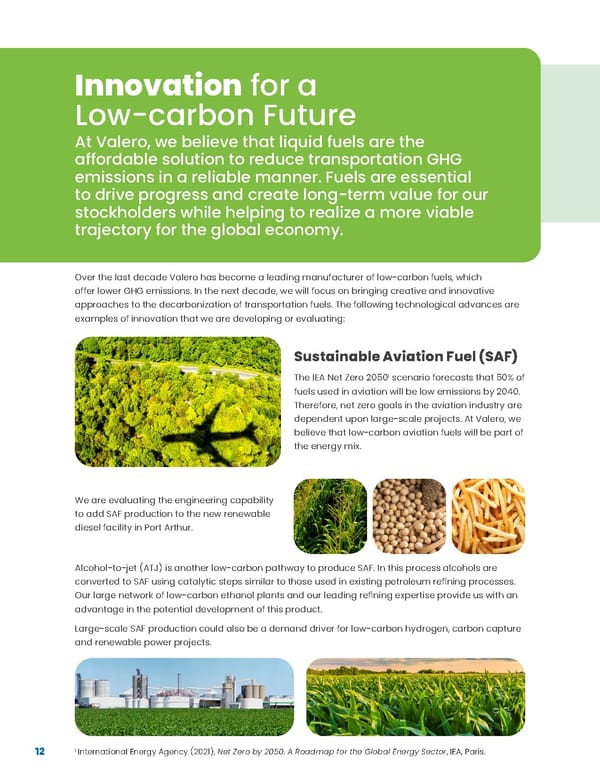
12 Sustainable Aviation Fuel (SAF) The IEA Net Zero 2050 1 scenario forecasts that 50% of fuels used in aviation will be low emissions by 2040. Therefore, net zero goals in the aviation industry are dependent upon large-scale projects. At Valero, we believe that low-carbon aviation fuels will be part of the energy mix. 1 International Energy Agency (2021), Net Zero by 2050. A Roadmap for the Global Energy Sector , IEA, Paris. Over the last decade Valero has become a leading manufacturer of low-carbon fuels, which offer lower GHG emissions. In the next decade, we will focus on bringing creative and innovative approaches to the decarbonization of transportation fuels. The following technological advances are examples of innovation that we are developing or evaluating: Innovation for a Low-carbon Future At Valero, we believe that liquid fuels are the affordable solution to reduce transportation GHG emissions in a reliable manner. Fuels are essential to drive progress and create long-term value for our stockholders while helping to realize a more viable trajectory for the global economy. We are evaluating the engineering capability to add SAF production to the new renewable diesel facility in Port Arthur. Alcohol-to-jet (ATJ) is another low-carbon pathway to produce SAF. In this process alcohols are converted to SAF using catalytic steps similar to those used in existing petroleum refining processes. Our large network of low-carbon ethanol plants and our leading refining expertise provide us with an advantage in the potential development of this product. Large-scale SAF production could also be a demand driver for low-carbon hydrogen, carbon capture and renewable power projects.
 Valero ESG Report Page 11 Page 13