

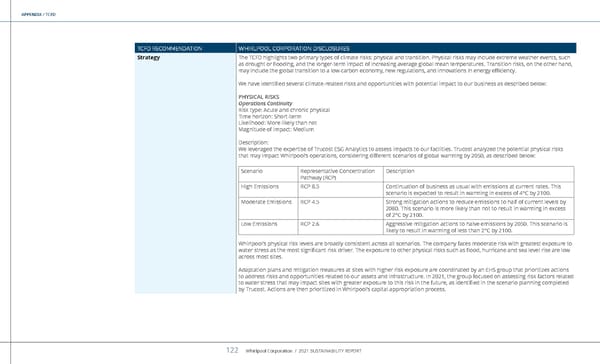
APPENDIX / TCFD TCFD RECOMMENDATION WHIRLPOOL CORPORATION DISCLOSURES Strategy The TCFD highlights two primary types of climate risks: physical and transition. Physical risks may include extreme weather events, such as drought or flooding, and the longer-term impact of increasing average global mean temperatures. Transition risks, on the other hand, may include the global transition to a low-carbon economy, new regulations, and innovations in energy efficiency. We have identified several climate-related risks and opportunities with potential impact to our business as described below: PHYSICAL RISKS Operations Continuity Risk type: Acute and chronic physical Time horizon: Short-term Likelihood: More likely than not Magnitude of impact: Medium Description: We leveraged the expertise of Trucost ESG Analytics to assess impacts to our facilities. Trucost analyzed the potential physical risks that may impact Whirlpool’s operations, considering different scenarios of global warming by 2050, as described below: Scenario Representative Concentration Pathway (RCP) Description High Emissions RCP 8.5 Continuation of business as usual with emissions at current rates. This scenario is expected to result in warming in excess of 4°C by 2100. Moderate Emissions RCP 4.5 Strong mitigation actions to reduce emissions to half of current levels by 2080. This scenario is more likely than not to result in warming in excess of 2°C by 2100. Low Emissions RCP 2.6 Aggressive mitigation actions to halve emissions by 2050. This scenario is likely to result in warming of less than 2°C by 2100. Whirlpool’s physical risk levels are broadly consistent across all scenarios. The company faces moderate risk with greatest exposure to water stress as the most significant risk driver. The exposure to other physical risks such as flood, hurricane and sea level rise are low across most sites. Adaptation plans and mitigation measures at sites with higher risk exposure are coordinated by an EHS group that prioritizes actions to address risks and opportunities related to our assets and infrastructure. In 2021, the group focused on assessing risk factors related to water stress that may impact sites with greater exposure to this risk in the future, as identified in the scenario planning completed by Trucost. Actions are then prioritized in Whirlpool’s capital appropriation process. Whirlpool Corporation / 2021 SUSTAINABILITY REPORT 122
 Whirlpool Sustainability Report Page 121 Page 123