

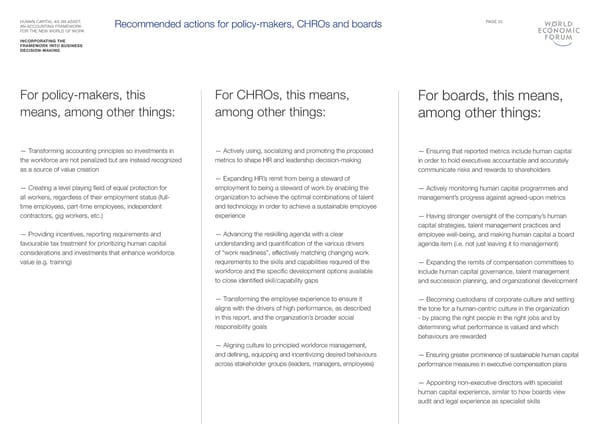
HUMAN CAPITAL AS AN ASSET: Recommended actions for policy-makers, CHROs and boards PAGE 32 AN ACCOUNTING FRAMEWORK FOR THE NEW WORLD OF WORK INCORPORATING THE FRAMEWORK INTO BUSINESS DECISION-MAKING For policy-makers, this For CHROs, this means, For boards, this means, means, among other things: among other things: among other things: — Transforming accounting principles so investments in — Actively using, socializing and promoting the proposed — Ensuring that reported metrics include human capital the workforce are not penalized but are instead recognized metrics to shape HR and leadership decision-making in order to hold executives accountable and accurately as a source of value creation communicate risks and rewards to shareholders — Expanding HR’s remit from being a steward of — Creating a level playing field of equal protection for employment to being a steward of work by enabling the — Actively monitoring human capital programmes and all workers, regardless of their employment status (full- organization to achieve the optimal combinations of talent management’s progress against agreed-upon metrics time employees, part-time employees, independent and technology in order to achieve a sustainable employee contractors, gig workers, etc.) experience — Having stronger oversight of the company’s human capital strategies, talent management practices and — Providing incentives, reporting requirements and — Advancing the reskilling agenda with a clear employee well-being, and making human capital a board favourable tax treatment for prioritizing human capital understanding and quantification of the various drivers agenda item (i.e. not just leaving it to management) considerations and investments that enhance workforce of “work readiness”, effectively matching changing work value (e.g. training) requirements to the skills and capabilities required of the — Expanding the remits of compensation committees to workforce and the specific development options available include human capital governance, talent management to close identified skill/capability gaps and succession planning, and organizational development — Transforming the employee experience to ensure it — Becoming custodians of corporate culture and setting aligns with the drivers of high performance, as described the tone for a human-centric culture in the organization in this report, and the organization’s broader social - by placing the right people in the right jobs and by responsibility goals determining what performance is valued and which behaviours are rewarded — Aligning culture to principled workforce management, and defining, equipping and incentivizing desired behaviours — Ensuring greater prominence of sustainable human capital across stakeholder groups (leaders, managers, employees) performance measures in executive compensation plans — Appointing non-executive directors with specialist human capital experience, similar to how boards view audit and legal experience as specialist skills
 Human Capital as an Asset Page 31 Page 33