

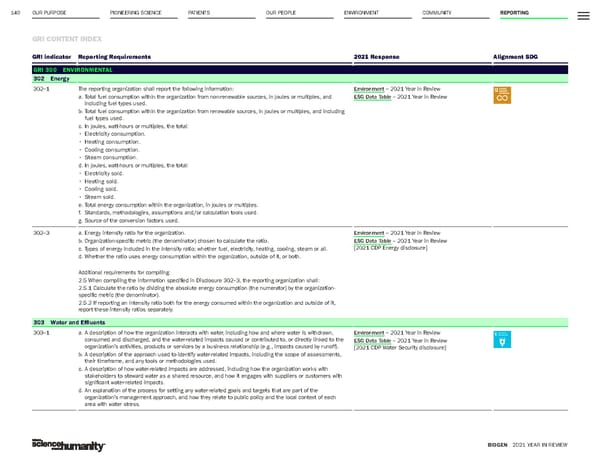
OUR PURPOSE PIONEERING SCIENCE 140 GRI CONTENT INDEX BIOGEN 2021 YEAR IN REVIEW PATIENTS OUR PEOPLE ENVIRONMENT COMMUNITY REPORTING GRI indicator Reporting Requirements 2021 Response Alignment SDG GRI 300 ENVIRONMENTAL 302 Energy 302–1 The reporting organization shall report the following information: a. Total fuel consumption within the organization from non-renewable sources, in joules or multiples, and including fuel types used. b. Total fuel consumption within the organization from renewable sources, in joules or multiples, and including fuel types used. c. In joules, watt-hours or multiples, the total: • Electricity consumption. • Heating consumption. • Cooling consumption. • Steam consumption. d. In joules, watt-hours or multiples, the total: • Electricity sold. • Heating sold. • Cooling sold. • Steam sold. e. Total energy consumption within the organization, in joules or multiples. f. Standards, methodologies, assumptions and/or calculation tools used. g. Source of the conversion factors used. Environment – 2021 Year in Review ESG Data Table – 2021 Year in Review 302–3 a. Energy intensity ratio for the organization. b. Organization-specific metric (the denominator) chosen to calculate the ratio. c. Types of energy included in the intensity ratio; whether fuel, electricity, heating, cooling, steam or all. d. Whether the ratio uses energy consumption within the organization, outside of it, or both. Additional requirements for compiling: 2.5 When compiling the information specified in Disclosure 302–3, the reporting organization shall: 2.5.1 Calculate the ratio by dividing the absolute energy consumption (the numerator) by the organization- specific metric (the denominator). 2.5.2 If reporting an intensity ratio both for the energy consumed within the organization and outside of it, report these intensity ratios separately. Environment – 2021 Year in Review ESG Data Table – 2021 Year in Review [2021 CDP Energy disclosure] 303 Water and Effluents 303–1 a. A description of how the organization interacts with water, including how and where water is withdrawn, consumed and discharged, and the water-related impacts caused or contributed to, or directly linked to the organization’s activities, products or services by a business relationship (e.g., impacts caused by runoff). b. A description of the approach used to identify water-related impacts, including the scope of assessments, their timeframe, and any tools or methodologies used. c. A description of how water-related impacts are addressed, including how the organization works with stakeholders to steward water as a shared resource, and how it engages with suppliers or customers with significant water-related impacts. d. An explanation of the process for setting any water-related goals and targets that are part of the organization’s management approach, and how they relate to public policy and the local context of each area with water stress. Environment – 2021 Year in Review ESG Data Table – 2021 Year in Review [2021 CDP Water Security disclosure]
 Biogen Year In Review Page 139 Page 141