

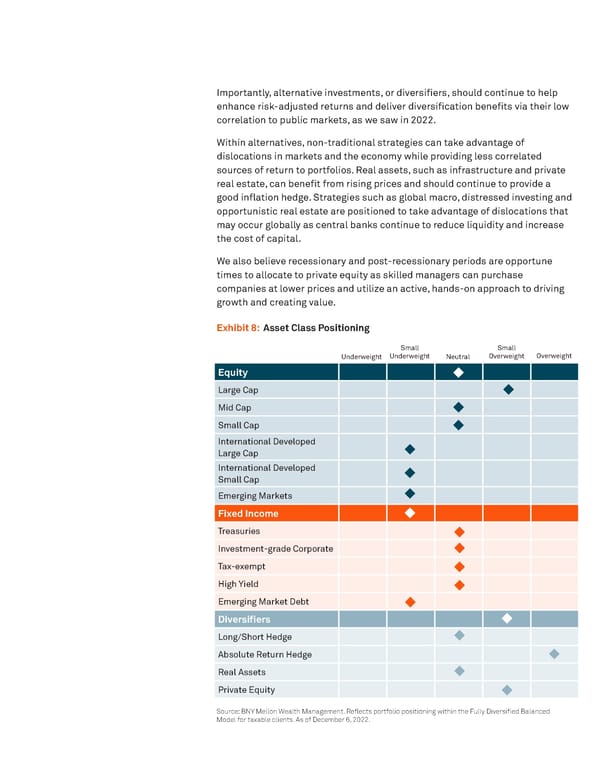
Importantly, alternative investments, or diversifiers, should continue to help enhance risk-adjusted returns and deliver diversification benefits via their low correlation to public markets, as we saw in 2022. Within alternatives, non-traditional strategies can take advantage of dislocations in markets and the economy while providing less correlated sources of return to portfolios. Real assets, such as infrastructure and private real estate, can benefit from rising prices and should continue to provide a good inflation hedge. Strategies such as global macro, distressed investing and opportunistic real estate are positioned to take advantage of dislocations that may occur globally as central banks continue to reduce liquidity and increase the cost of capital. We also believe recessionary and post-recessionary periods are opportune times to allocate to private equity as skilled managers can purchase companies at lower prices and utilize an active, hands-on approach to driving growth and creating value. Exhibit 8: Asset Class Positioning Small Small Underweight Underweight Neutral Overweight Overweight Equity Large Cap Mid Cap Small Cap International Developed Large Cap International Developed Small Cap Emerging Markets Fixed Income Treasuries Investment-grade Corporate Tax-exempt High Yield Emerging Market Debt Diversifiers Long/Short Hedge Absolute Return Hedge Real Assets Private Equity Source: BNY Mellon Wealth Management. Reflects portfolio positioning within the Fully Diversified Balanced Model for taxable clients. As of December 6, 2022.
 BNY Mellon 2023 Outlook Page 9 Page 11