

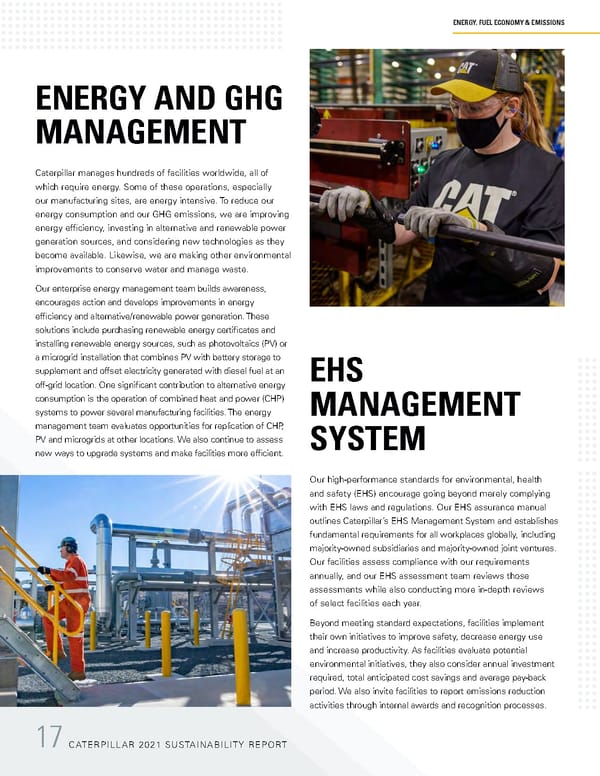
ENERGY, FUEL ECONOMY & EMISSIONS ENERGY AND GHG MANAGEMENT Caterpillar manages hundreds of facilities worldwide, all of which require energy. Some of these operations, especially our manufacturing sites, are energy intensive. To reduce our energy consumption and our GHG emissions, we are improving energy efficiency, investing in alternative and renewable power generation sources, and considering new technologies as they become available. Likewise, we are making other environmental improvements to conserve water and manage waste. Our enterprise energy management team builds awareness, encourages action and develops improvements in energy efficiency and alternative/renewable power generation. These solutions include purchasing renewable energy certificates and installing renewable energy sources, such as photovoltaics (PV) or a microgrid installation that combines PV with battery storage to supplement and offset electricity generated with diesel fuel at an EHS off-grid location. One significant contribution to alternative energy consumption is the operation of combined heat and power (CHP) systems to power several manufacturing facilities. The energy MANAGEMENT management team evaluates opportunities for replication of CHP, PV and microgrids at other locations. We also continue to assess SYSTEM new ways to upgrade systems and make facilities more efficient. Our high-performance standards for environmental, health and safety (EHS) encourage going beyond merely complying with EHS laws and regulations. Our EHS assurance manual outlines Caterpillar’s EHS Management System and establishes fundamental requirements for all workplaces globally, including majority-owned subsidiaries and majority-owned joint ventures. Our facilities assess compliance with our requirements annually, and our EHS assessment team reviews those assessments while also conducting more in-depth reviews of select facilities each year. Beyond meeting standard expectations, facilities implement their own initiatives to improve safety, decrease energy use and increase productivity. As facilities evaluate potential environmental initiatives, they also consider annual investment required, total anticipated cost savings and average pay-back period. We also invite facilities to report emissions reduction activities through internal awards and recognition processes. 17CATERPILLAR 2021 SUSTAINABILITY REPORT
 Caterpillar Sustainability Report Page 16 Page 18