

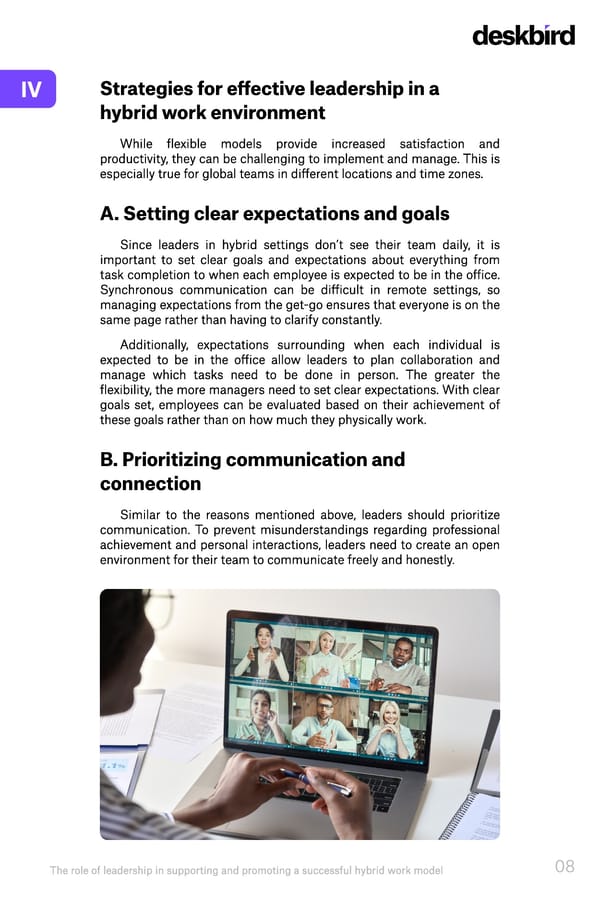
08 The role of leadership in supporting and promoting a successful hybrid work model IV Strategies for effective leadership in a hybrid work environment While flexible models provide increased satisfaction and productivity, they can be challenging to implement and manage. This is especially true for global teams in different locations and time zones. A. Setting clear expectations and goals B. Prioritizing communication and connection Since leaders in hybrid settings don’t see their team daily, it is important to set clear goals and expectations about everything from task completion to when each employee is expected to be in the office. Synchronous communication can be difficult in remote settings, so managing expectations from the get-go ensures that everyone is on the same page rather than having to clarify constantly. Additionally, expectations surrounding when each individual is expected to be in the office allow leaders to plan collaboration and manage which tasks need to be done in person. The greater the flexibility, the more managers need to set clear expectations. With clear goals set, employees can be evaluated based on their achievement of these goals rather than on how much they physically work. Similar to the reasons mentioned above, leaders should prioritize communication. To prevent misunderstandings regarding professional achievement and personal interactions, leaders need to create an open environment for their team to communicate freely and honestly.
 Deskbird 2023 | Whitepaper Page 7 Page 9