

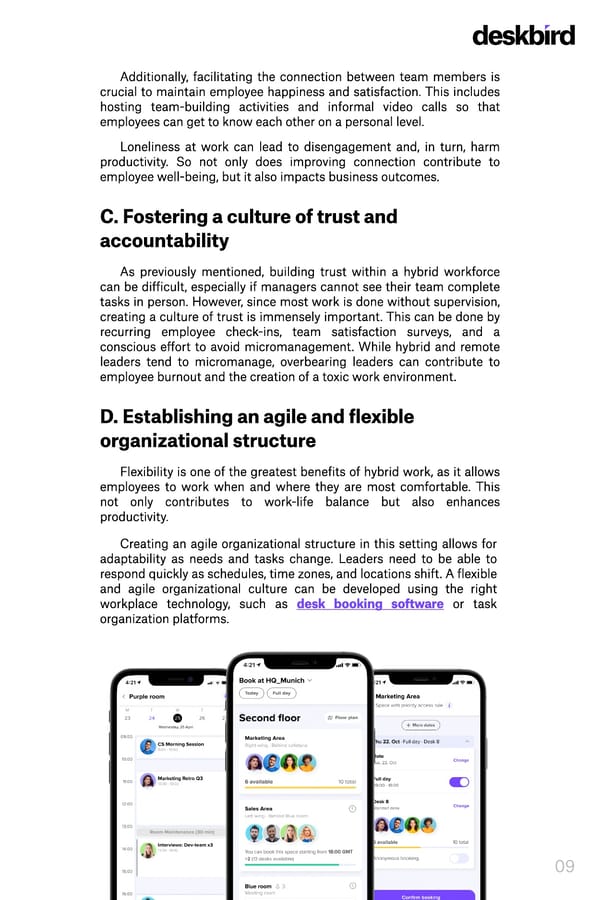
09 C. Fostering a culture of trust and accountability D. Establishing an agile and flexible organizational structure Additionally, facilitating the connection between team members is crucial to maintain employee happiness and satisfaction. This includes hosting team-building activities and informal video calls so that employees can get to know each other on a personal level. Loneliness at work can lead to disengagement and, in turn, harm productivity. So not only does improving connection contribute to employee well-being, but it also impacts business outcomes. As previously mentioned, building trust within a hybrid workforce can be difficult, especially if managers cannot see their team complete tasks in person. However, since most work is done without supervision, creating a culture of trust is immensely important. This can be done by recurring employee check-ins, team satisfaction surveys, and a conscious effort to avoid micromanagement. While hybrid and remote leaders tend to micromanage, overbearing leaders can contribute to employee burnout and the creation of a toxic work environment. Flexibility is one of the greatest benefits of hybrid work, as it allows employees to work when and where they are most comfortable. This not only contributes to work-life balance but also enhances productivity. Creating an agile organizational structure in this setting allows for adaptability as needs and tasks change. Leaders need to be able to respond quickly as schedules, time zones, and locations shift. A flexible and agile organizational culture can be developed using the right workplace technology, such as or task organization platforms. desk booking software
 Deskbird 2023 | Whitepaper Page 8 Page 10