

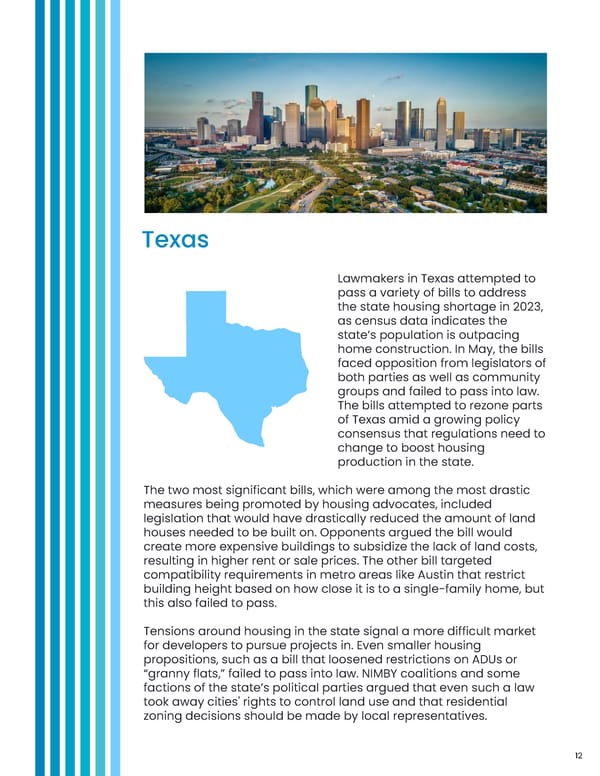
Texas Lawmakers in Texas attempted to pass a variety of bills to address the state housing shortage in 2023, as census data indicates the state’s population is outpacing home construction. In May, the bills faced opposition from legislators of both parties as well as community groups and failed to pass into law. The bills attempted to rezone parts of Texas amid a growing policy consensus that regulations need to change to boost housing production in the state. The two most significant bills, which were among the most drastic measures being promoted by housing advocates, included legislation that would have drastically reduced the amount of land houses needed to be built on. Opponents argued the bill would create more expensive buildings to subsidize the lack of land costs, resulting in higher rent or sale prices. The other bill targeted compatibility requirements in metro areas like Austin that restrict building height based on how close it is to a single-family home, but this also failed to pass. Tensions around housing in the state signal a more difficult market for developers to pursue projects in. Even smaller housing propositions, such as a bill that loosened restrictions on ADUs or “granny flats,” failed to pass into law. NIMBY coalitions and some factions of the state’s political parties argued that even such a law took away cities' rights to control land use and that residential zoning decisions should be made by local representatives. 12
 Driving The Next Decade of Development, State-By-State Page 11 Page 13