

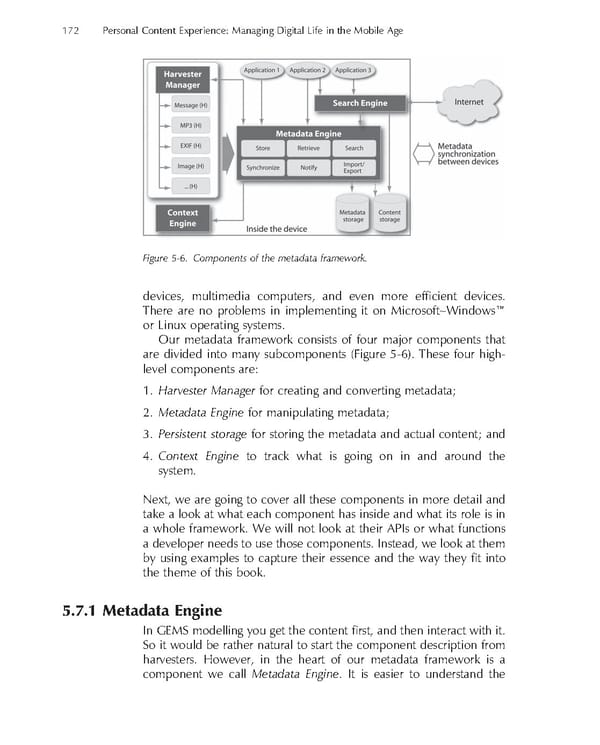
172 Personal Content Experience: Managing Digital Life in the Mobile Age Figure 5-6. Components of the metadata framework. devices, multimedia computers, and even more effi cient devices. There are no problems in implementing it on Microsoft∼Windows™ or Linux operating systems. Our metadata framework consists of four major components that are divided into many subcomponents (Figure 5-6). These four high- level components are: 1. Harvester Manager for creating and converting metadata; 2. Metadata Engine for manipulating metadata; 3. Persistent storage for storing the metadata and actual content; and 4. Context Engine to track what is going on in and around the system. Next, we are going to cover all these components in more detail and take a look at what each component has inside and what its role is in a whole framework. We will not look at their APIs or what functions a developer needs to use those components. Instead, we look at them by using examples to capture their essence and the way they fi t into the theme of this book. 5.7.1 Metadata Engine In GEMS modelling you get the content fi rst, and then interact with it. So it would be rather natural to start the component description from harvesters. However, in the heart of our metadata framework is a component we call Metadata Engine. It is easier to understand the
 Personal Content Experience Page 195 Page 197