

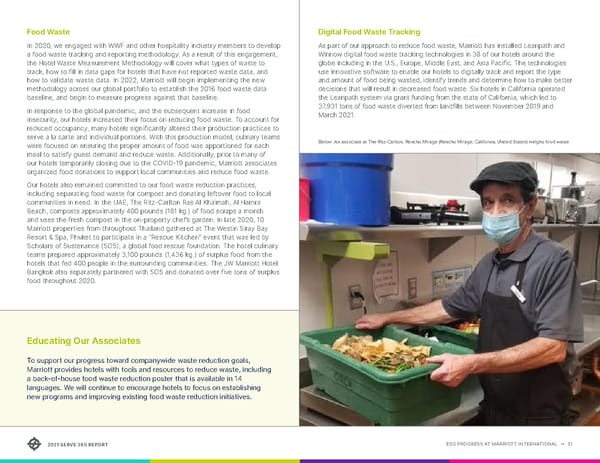
2021 SERVE 360 REPORT ESG PROGRESS AT MARRIOTT INTERNATIONAL → 31 Food Waste In 2020, we engaged with WWF and other hospitality industry members to develop a food waste tracking and reporting methodology. As a result of this engagement, the Hotel Waste Measurement Methodology will cover what types of waste to track, how to fill in data gaps for hotels that have not reported waste data, and how to validate waste data. In 2022, Marriott will begin implementing the new methodology across our global portfolio to establish the 2016 food waste data baseline, and begin to measure progress against that baseline. In response to the global pandemic, and the subsequent increase in food insecurity, our hotels increased their focus on reducing food waste. To account for reduced occupancy, many hotels significantly altered their production practices to serve a la carte and individual portions. With this production model, culinary teams were focused on ensuring the proper amount of food was apportioned for each meal to satisfy guest demand and reduce waste. Additionally, prior to many of our hotels temporarily closing due to the COVID-19 pandemic, Marriott associates organized food donations to support local communities and reduce food waste. Our hotels also remained committed to our food waste reduction practices, including separating food waste for compost and donating leftover food to local communities in need. In the UAE, The Ritz-Carlton Ras Al Khaimah, Al Hamra Beach, composts approximately 400 pounds (181 kg.) of food scraps a month and uses the fresh compost in the on-property chef’s garden. In late 2020, 10 Marriott properties from throughout Thailand gathered at The Westin Siray Bay Resort & Spa, Phuket to participate in a “Rescue Kitchen” event that was led by Scholars of Sustenance (SOS), a global food rescue foundation. The hotel culinary teams prepared approximately 3,100 pounds (1,436 kg.) of surplus food from the hotels that fed 400 people in the surrounding communities. The JW Marriott Hotel Bangkok also separately partnered with SOS and donated over five tons of surplus food throughout 2020. Digital Food Waste Tracking As part of our approach to reduce food waste, Marriott has installed Leanpath and Winnow digital food waste tracking technologies in 38 of our hotels around the globe including in the U.S., Europe, Middle East, and Asia Pacific. The technologies use innovative software to enable our hotels to digitally track and report the type and amount of food being wasted, identify trends and determine how to make better decisions that will result in decreased food waste. Six hotels in California operated the Leanpath system via grant funding from the state of California, which led to 37,931 tons of food waste diverted from landfills between November 2019 and March 2021. Educating Our Associates To support our progress toward companywide waste reduction goals, Marriott provides hotels with tools and resources to reduce waste, including a back-of-house food waste reduction poster that is available in 14 languages. We will continue to encourage hotels to focus on establishing new programs and improving existing food waste reduction initiatives. Below: An associate at The Ritz-Carlton, Rancho Mirage (Rancho Mirage, California, United States) weighs food waste
 Serve360 ESG Report Page 30 Page 32