

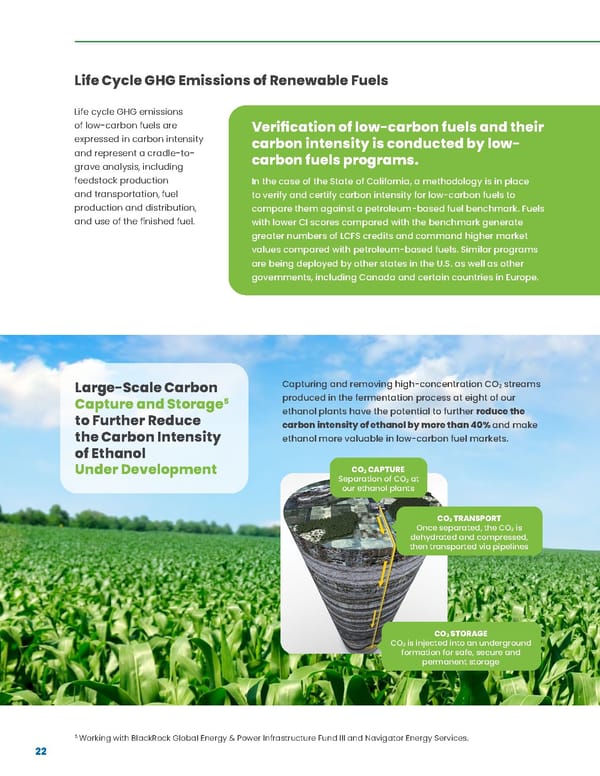
22 Life Cycle GHG Emissions of Renewable Fuels Large-Scale Carbon Capture and Storage 5 to Further Reduce the Carbon Intensity of Ethanol Under Development 5 Working with BlackRock Global Energy & Power Infrastructure Fund III and Navigator Energy Services. CO 2 CAPTURE Separation of CO 2 at our ethanol plants CO 2 STORAGE CO 2 is injected into an underground formation for safe, secure and permanent storage CO 2 TRANSPORT Once separated, the CO 2 is dehydrated and compressed, then transported via pipelines Life cycle GHG emissions of low-carbon fuels are expressed in carbon intensity and represent a cradle-to- grave analysis, including feedstock production and transportation, fuel production and distribution, and use of the finished fuel. Verification of low-carbon fuels and their carbon intensity is conducted by low- carbon fuels programs. In the case of the State of California, a methodology is in place to verify and certify carbon intensity for low-carbon fuels to compare them against a petroleum-based fuel benchmark. Fuels with lower CI scores compared with the benchmark generate greater numbers of LCFS credits and command higher market values compared with petroleum-based fuels. Similar programs are being deployed by other states in the U.S. as well as other governments, including Canada and certain countries in Europe. Capturing and removing high-concentration CO 2 streams produced in the fermentation process at eight of our ethanol plants have the potential to further reduce the carbon intensity of ethanol by more than 40% and make ethanol more valuable in low-carbon fuel markets.
 Valero ESG Report Page 21 Page 23