

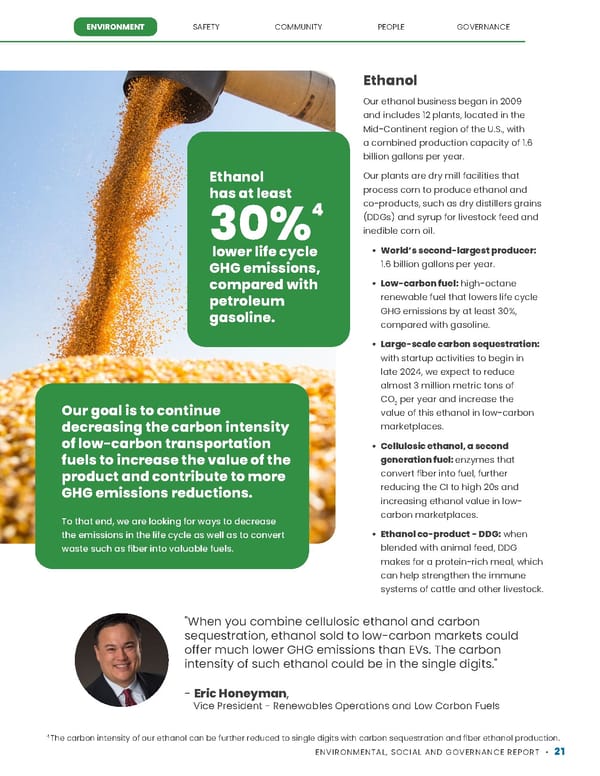
ENVIRONMENTAL, SOCIAL AND GOVERNANCE REPORT • 21 SAFETY COMMUNITY PEOPLE GOVERNANCE ENVIRONMENT Ethanol Our ethanol business began in 2009 and includes 12 plants, located in the Mid-Continent region of the U.S., with a combined production capacity of 1.6 billion gallons per year. Our plants are dry mill facilities that process corn to produce ethanol and co-products, such as dry distillers grains (DDGs) and syrup for livestock feed and inedible corn oil. • World’s second-largest producer: 1.6 billion gallons per year. • Low-carbon fuel: high-octane renewable fuel that lowers life cycle GHG emissions by at least 30%, compared with gasoline. • Large-scale carbon sequestration: with startup activities to begin in late 2024, we expect to reduce almost 3 million metric tons of CO 2 per year and increase the value of this ethanol in low-carbon marketplaces. • Cellulosic ethanol, a second generation fuel: enzymes that convert fiber into fuel, further reducing the CI to high 20s and increasing ethanol value in low- carbon marketplaces. • Ethanol co-product - DDG: when blended with animal feed, DDG makes for a protein-rich meal, which can help strengthen the immune systems of cattle and other livestock. Our goal is to continue decreasing the carbon intensity of low-carbon transportation fuels to increase the value of the product and contribute to more GHG emissions reductions. To that end, we are looking for ways to decrease the emissions in the life cycle as well as to convert waste such as fiber into valuable fuels. "When you combine cellulosic ethanol and carbon sequestration, ethanol sold to low-carbon markets could offer much lower GHG emissions than EVs. The carbon intensity of such ethanol could be in the single digits." - Eric Honeyman , Vice President - Renewables Operations and Low Carbon Fuels Ethanol has at least 30% 4 lower life cycle GHG emissions, compared with petroleum gasoline. 4 The carbon intensity of our ethanol can be further reduced to single digits with carbon sequestration and fiber ethanol production.
 Valero ESG Report Page 20 Page 22