

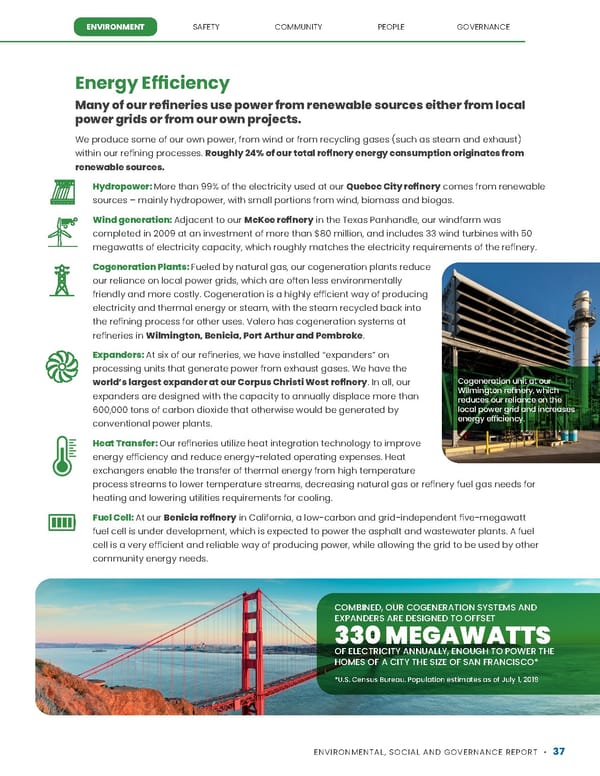
ENVIRONMENTAL, SOCIAL AND GOVERNANCE REPORT • 37 SAFETY COMMUNITY PEOPLE GOVERNANCE ENVIRONMENT Energy Efficiency Many of our refineries use power from renewable sources either from local power grids or from our own projects. We produce some of our own power, from wind or from recycling gases (such as steam and exhaust) within our refining processes. Roughly 24% of our total refinery energy consumption originates from renewable sources. Hydropower: More than 99% of the electricity used at our Quebec City refinery comes from renewable sources – mainly hydropower, with small portions from wind, biomass and biogas. Wind generation: Adjacent to our McKee refinery in the Texas Panhandle, our windfarm was completed in 2009 at an investment of more than $80 million, and includes 33 wind turbines with 50 megawatts of electricity capacity, which roughly matches the electricity requirements of the refinery. Cogeneration Plants: Fueled by natural gas, our cogeneration plants reduce our reliance on local power grids, which are often less environmentally friendly and more costly. Cogeneration is a highly efficient way of producing electricity and thermal energy or steam, with the steam recycled back into the refining process for other uses. Valero has cogeneration systems at refineries in Wilmington, Benicia, Port Arthur and Pembroke . Expanders: At six of our refineries, we have installed “expanders” on processing units that generate power from exhaust gases. We have the world’s largest expander at our Corpus Christi West refinery . In all, our expanders are designed with the capacity to annually displace more than 600,000 tons of carbon dioxide that otherwise would be generated by conventional power plants. Heat Transfer: Our refineries utilize heat integration technology to improve energy efficiency and reduce energy-related operating expenses. Heat exchangers enable the transfer of thermal energy from high temperature process streams to lower temperature streams, decreasing natural gas or refinery fuel gas needs for heating and lowering utilities requirements for cooling. Fuel Cell: At our Benicia refinery in California, a low-carbon and grid-independent five-megawatt fuel cell is under development, which is expected to power the asphalt and wastewater plants. A fuel cell is a very efficient and reliable way of producing power, while allowing the grid to be used by other community energy needs. COMBINED, OUR COGENERATION SYSTEMS AND EXPANDERS ARE DESIGNED TO OFFSET 330 MEGAWATTS OF ELECTRICITY ANNUALLY, ENOUGH TO POWER THE HOMES OF A CITY THE SIZE OF SAN FRANCISCO* *U.S. Census Bureau. Population estimates as of July 1, 2019 Cogeneration unit at our Wilmington refinery, which reduces our reliance on the local power grid and increases energy efficiency.
 Valero ESG Report Page 36 Page 38