

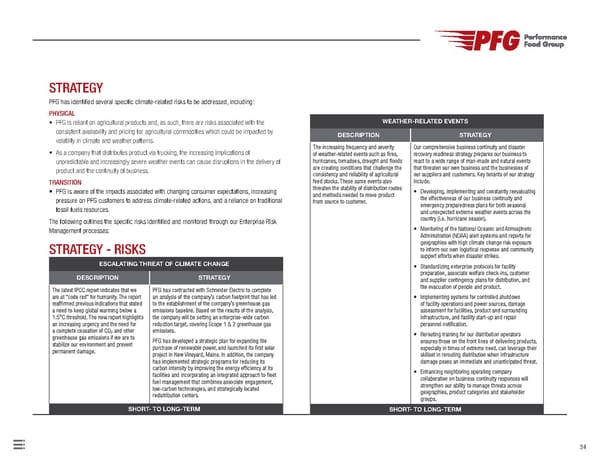
34 STRATEGY PFG has identified several specific climate-related risks to be addressed, including: PHYSICAL • PFG is reliant on agricultural products and, as such, there are risks associated with the consistent availability and pricing for agricultural commodities which could be impacted by volatility in climate and weather patterns. • As a company that distributes product via trucking, the increasing implications of unpredictable and increasingly severe weather events can cause disruptions in the delivery of product and the continuity of business. TRANSITION • PFG is aware of the impacts associated with changing consumer expectations, increasing pressure on PFG customers to address climate-related actions, and a reliance on traditional fossil fuels resources. The following outlines the specific risks identified and monitored through our Enterprise Risk Management processes: ESCALATING THREAT OF CLIMATE CHANGE DESCRIPTION STRATEGY The latest IPCC report indicates that we are at “code red” for humanity. The report reaffirmed previous indications that stated a need to keep global warming below a 1.5 ° C threshold. The new report highlights an increasing urgency and the need for a complete cessation of CO 2 and other greenhouse gas emissions if we are to stabilize our environment and prevent permanent damage. PFG has contracted with Schneider Electric to complete an analysis of the company’s carbon footprint that has led to the establishment of the company’s greenhouse gas emissions baseline. Based on the results of the analysis, the company will be setting an enterprise-wide carbon reduction target, covering Scope 1 & 2 greenhouse gas emissions. PFG has developed a strategic plan for expanding the purchase of renewable power, and launched its first solar project in New Vineyard, Maine. In addition, the company has implemented strategic programs for reducing its carbon intensity by improving the energy efficiency at its facilities and incorporating an integrated approach to fleet fuel management that combines associate engagement, low-carbon technologies, and strategically located redistribution centers. SHORT- TO LONG-TERM WEATHER-RELATED EVENTS DESCRIPTION STRATEGY The increasing frequency and severity of weather-related events such as fires, hurricanes, tornadoes, drought and floods are creating conditions that challenge the consistency and reliability of agricultural feed stocks. These same events also threaten the stability of distribution routes and methods needed to move product from source to customer. Our comprehensive business continuity and disaster recovery readiness strategy prepares our business to react to a wide range of man-made and natural events that threaten our own business and the businesses of our suppliers and customers. Key tenants of our strategy include: • Developing, implementing and constantly reevaluating the effectiveness of our business continuity and emergency preparedness plans for both seasonal and unexpected extreme weather events across the country (i.e. hurricane season). • Monitoring of the National Oceanic and Atmospheric Administration (NOAA) alert systems and reports for geographies with high climate change risk exposure to inform our own logistical response and community support efforts when disaster strikes. • Standardizing enterprise protocols for facility preparation, associate welfare check-ins, customer and supplier contingency plans for distribution, and the evacuation of people and product. • Implementing systems for controlled shutdown of facility operations and power sources, damage assessment for facilities, product and surrounding infrastructure, and facility start-up and repair personnel notification. • Rerouting training for our distribution operators ensures those on the front lines of delivering products, especially in times of extreme need, can leverage their skillset in rerouting distribution when infrastructure damage poses an immediate and unanticipated threat. • Enhancing neighboring operating company collaboration on business continuity responses will strengthen our ability to manage threats across geographies, product categories and stakeholder groups. SHORT- TO LONG-TERM STRATEGY - RISKS
 Performance Food Group ESG Report Page 33 Page 35