

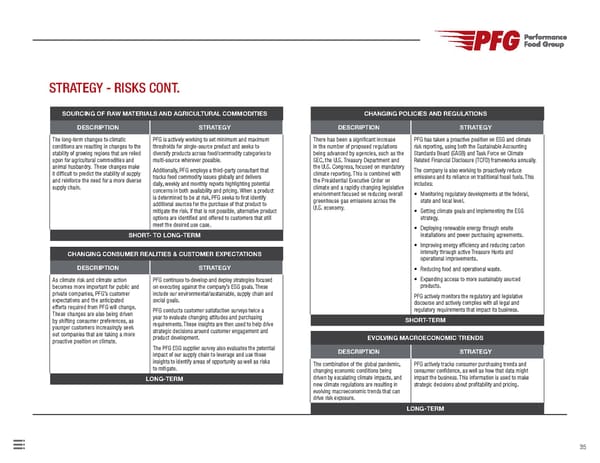
35 STRATEGY - RISKS CONT. SOURCING OF RAW MATERIALS AND AGRICULTURAL COMMODITIES DESCRIPTION STRATEGY The long-term changes to climatic conditions are resulting in changes to the stability of growing regions that are relied upon for agricultural commodities and animal husbandry. These changes make it difficult to predict the stability of supply and reinforce the need for a more diverse supply chain. PFG is actively working to set minimum and maximum thresholds for single-source product and seeks to diversify products across food/commodity categories to multi-source wherever possible. Additionally, PFG employs a third-party consultant that tracks food commodity issues globally and delivers daily, weekly and monthly reports highlighting potential concerns in both availability and pricing. When a product is determined to be at risk, PFG seeks to first identify additional sources for the purchase of that product to mitigate the risk. If that is not possible, alternative product options are identified and offered to customers that still meet the desired use case. SHORT- TO LONG-TERM CHANGING POLICIES AND REGULATIONS DESCRIPTION STRATEGY There has been a significant increase in the number of proposed regulations being advanced by agencies, such as the SEC, the U.S. Treasury Department and the U.S. Congress, focused on mandatory climate reporting. This is combined with the Presidential Executive Order on climate and a rapidly changing legislative environment focused on reducing overall greenhouse gas emissions across the U.S. economy. PFG has taken a proactive position on ESG and climate risk reporting, using both the Sustainable Accounting Standards Board (SASB) and Task Force on Climate Related Financial Disclosure (TCFD) frameworks annually. The company is also working to proactively reduce emissions and its reliance on traditional fossil fuels. This includes: • Monitoring regulatory developments at the federal, state and local level. • Setting climate goals and implementing the ESG strategy. • Deploying renewable energy through onsite installations and power purchasing agreements. • Improving energy efficiency and reducing carbon intensity through active Treasure Hunts and operational improvements. • Reducing food and operational waste. • Expanding access to more sustainably sourced products. PFG actively monitors the regulatory and legislative discourse and actively complies with all legal and regulatory requirements that impact its business. SHORT-TERM EVOLVING MACROECONOMIC TRENDS DESCRIPTION STRATEGY The combination of the global pandemic, changing economic conditions being driven by escalating climate impacts, and new climate regulations are resulting in evolving macroeconomic trends that can drive risk exposure. PFG actively tracks consumer purchasing trends and consumer confidence, as well as how that data might impact the business. This information is used to make strategic decisions about profitability and pricing. LONG-TERM CHANGING CONSUMER REALITIES & CUSTOMER EXPECTATIONS DESCRIPTION STRATEGY As climate risk and climate action becomes more important for public and private companies, PFG’s customer expectations and the anticipated efforts required from PFG will change. These changes are also being driven by shifting consumer preferences, as younger customers increasingly seek out companies that are taking a more proactive position on climate. PFG continues to develop and deploy strategies focused on executing against the company’s ESG goals. These include our environmental/sustainable, supply chain and social goals. PFG conducts customer satisfaction surveys twice a year to evaluate changing attitudes and purchasing requirements. These insights are then used to help drive strategic decisions around customer engagement and product development. The PFG ESG supplier survey also evaluates the potential impact of our supply chain to leverage and use those insights to identify areas of opportunity as well as risks to mitigate. LONG-TERM
 Performance Food Group ESG Report Page 34 Page 36