

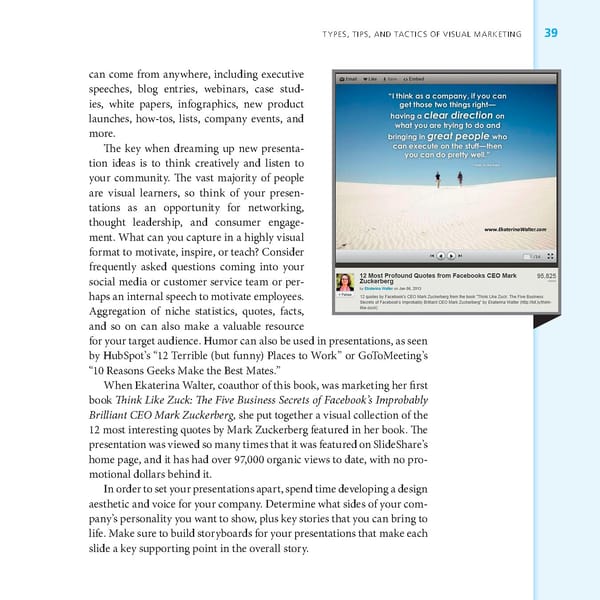
TYPES, TIPS, AND TACTICS OF VISUAL MARKETING 39 can come from anywhere, including executive speeches, blog entries, webinars, case stud- ies, white papers, infographics, new product launches, how-tos, lists, company events, and more. The key when dreaming up new presenta- tion ideas is to think creatively and listen to your community. The vast majority of people are visual learners, so think of your presen- tations as an opportunity for networking, thought leadership, and consumer engage- ment. What can you capture in a highly visual format to motivate, inspire, or teach? Consider frequently asked questions coming into your social media or customer service team or per- haps an internal speech to motivate employees. Aggregation of niche statistics, quotes, facts, and so on can also make a valuable resource for your target audience. Humor can also be used in presentations, as seen by HubSpot’s “12 Terrible (but funny) Places to Work” or GoToMeeting’s “10 Reasons Geeks Make the Best Mates.” When Ekaterina Walter, coauthor of this book, was marketing her first book Think Like Zuck: The Five Business Secrets of Facebook’s Improbably Brilliant CEO Mark Zuckerberg, she put together a visual collection of the 12 most interesting quotes by Mark Zuckerberg featured in her book. The presentation was viewed so many times that it was featured on SlideShare’s home page, and it has had over 97,000 organic views to date, with no pro- motional dollars behind it. In order to set your presentations apart, spend time developing a design aesthetic and voice for your company. Determine what sides of your com- pany’s personality you want to show, plus key stories that you can bring to life. Make sure to build storyboards for your presentations that make each slide a key supporting point in the overall story.
 The Power of Visual Storytelling: How to Use Visuals, Videos, and Social Media to Market Your Brand Page 52 Page 54